Another mother leaves a great job

People leaving jobs for reasons they don't want to discuss often say something hackneyed about spending more time with family. But it appears that Michèle Flournoy literally means it.
Flournoy, 50, is a top Pentagon policy adviser and potential first female defense secretary. She announced this week that she will quit after the New Year to have more time with her three children, ages 14, 12 and 9. Her work for the Defense Department often runs from 7 a.m. to 8 p.m., and over many weekends.
Flournoy's work sounds fascinating. She testifies before Congress, and is strategizing troop levels in Iraq and Afghanistan. That's a lot to give up for three kids.
Which is why I love that she stated her reason so baldly: The work of being a mother is important, too.
It's possible there's more to her story -- who knows? But her public affirmation of motherhood is brave. It risks the anger of those who argue women can "have it all." Flournoy invites the envy of parents who have to work for financial reasons; she's married to a top deputy at the Department of Veterans Affairs. She risks instilling doubt in the junior women -- perhaps also mothers -- whom she sought to mentor and inspire. And she courts ridicule by the ignorant. Remember when talk show host Mike Gallagher called Fox News anchor Megyn Kelly's three-month maternity leave "a racket"?
Highly visible women should keep talking about the importance of parenting, because they can have repercussions for working moms and dads who aren't among the power elite. There are many parents who don't have the protections of money or status to assert something so basic as the need for time away from a job to raise children.
And working people have ever less leverage now, as the depressed economy has "excessed" so many into the unemployment line. In the spring of 2009, a House subcommittee on Workforce Protections, chaired by Rep. Lynn Woolsey (D-Calif.), heard testimony from advocates that the dismal economy was pushing parents out of the workforce because their opportunities for flexible work schedules were drying up. Parents who had worked a four-day week, for example, found their employers suddenly requiring five days.
Sometimes, employers were trying to stretch to make do with the current workforce, because they didn't want to hire anyone new. But the result was often to upset a delicate balance and force the parents out.
Flexible schedules are rarely set down in writing and can disappear when an accommodating manager is replaced by someone less family-friendly. Another possibility -- and the one that most concerned Congress -- was that employers could be using the bad economy to discriminate against pregnant workers and parents.
Recognizing how precarious the work-family balance continues to be, some companies have begun making flexible work arrangements more formal. For example, KPMG, the audit firm based in Idaho, with offices in Melville, has a flexibility website where employees can explore compressed work weeks, telecommuting, job sharing and more.
Of course, accounting firms like KPMG battle notoriously high turnover, so they look for ways to retain employees. At other kinds of jobs, many workers don't even have paid sick days -- in fact, 47 percent of private-sector workers, according to the Department of Labor. We have a long way to go as a country that supports parents.
People like Flournoy should keep up the drumbeat about the importance of child-raising, reminding employers that parents have important work off the job, too.
First published in Newsday.
Readers respond: Students need layoff facts
Regarding the column by Anne Michaud, "Keep school budget talk out of the classroom" [Opinion, Dec. 8], I agree that children need to feel secure in school. Their focus needs to be on learning. A major part of that learning should, in my opinion, be relating knowledge to reality. What good are the three Rs if we don't see the issues that are facing us daily?
We live in a society that has a small percentage of people voting in general and school elections. This lack of response leads to lack of control over the direction our country takes and sometimes even to corruption in government.
It is imperative that our children learn to be good citizens and participate in our democracy. If this means bringing up budget concerns to students old enough to understand, then they should be mentioned. An open discussion talking about the whole process and not focusing just on layoffs, would be in order. This hopefully would bring students to begin thinking about mundane issues that our society faces on a daily basis. Opening their young minds would undoubtedly lead to a more involved electorate later on.
Steve Tuck, Huntington
If a teacher is asked a question by a student, shouldn't it be answered? I find it amusing that a person who contributes to Newsday's Opinion pages wants to now control the things we say in class. Newspaper columnists get their forum without any input from readers.
I find all the harsh rhetoric printed in the last several years about teachers "divisive, angry and unhealthy" as well. When class sizes are larger and programs are cut, remember the true culprits: the financial institutions and oil companies whose employees and owners still get record bonuses each year -- on average, more than teachers make in a year.
Rich Weeks, Middle Island
I believe that Anne Michaud completely missed the point. School budget talks allow Social Studies teachers to discuss relevant and current issues facing our communities. This issue lends itself to great discussions of limited resources, the role of the citizen in a democracy, economic choices and a whole host of other topics. This is what we call a teachable moment.
We do our students a great disservice when we try to shelter them from what is happening in the news.
Kathleen Stanley, Massapequa Park Editor's note: The writer is a high school Social Studies teacher.
As a teacher in a public high school, I feel that I need to explain why teachers sometimes discuss rules governing teacher layoffs (last in, first out) with their students. A lot of students don't understand the difference between being laid off and being fired. They just assume that when someone is excessed because of budgetary reasons, that person has been fired for cause.
I feel it is important to explain to students how tenure and seniority work. It's bad enough when colleagues are let go. I'm certainly not going to let their reputations be tarnished with misinformation.
The column is right in this sense, that younger children should not be frightened by teachers into thinking Mom and Dad hold the key to a teacher's survival, and children should therefore convince their parents to vote for the budget. It's a cheap ploy.
However, I also think that when students come to school and tell me their parents say I make too much money and have it really easy, that I should be allowed to defend my profession. I don't think it's inappropriate to discuss the realities with older students, some of whom will be able to participate in the upcoming budget votes.
Jeffrey A. Stotsky, Forest Hills
Keep school budget talk out of the classroom

Recently, I was driving my seventh-grader to one of her many events, when she began explaining LIFO to me. She told me that the youngest teachers were usually the ones to lose their jobs when there are budget cuts: "last in, first out."
I don't consider this information a seventh-grader should be thinking about - except perhaps when learning labor history in the classroom. She said that her teachers, and others, have been talking about the politics of school budgets.
It may seem a little soon, given that budgets won't be up for a public vote until May. But people are thinking ahead since this time around will be different. New York schools will be budgeting to stay under the 2 percent property tax cap passed earlier this year.
This week, Gov. Andrew M. Cuomo negotiated a deal to restructure state income tax rates so that New York will be able to afford a promised 4 percent increase in state aid to schools next year. I hope that deal takes some of the tension out of the classroom, because I don't think school budget cuts are a proper topic for students.
I first heard such concerns from my daughter when she was in fourth grade and came home to report that her teacher might lose her job if the school budget didn't pass. The message to parents was that we should get out and vote "yes." It was the emotional equivalent of dangling a baby over a banister.
I sent an email to another teacher, who was the supervisor of my daughter's program, and said I didn't think they should be talking in class about teacher layoffs. First, it's scary for kids to think that the teacher could suddenly be gone. There's an emotional attachment between student and teacher.
It's also frightening for kids to contemplate how their teacher might be harmed by job loss. Last, it's unfair to imply that Mommy and Daddy hold the only key - the ballot box - to saving Teacher's job.
Could it be that if the school board had negotiated a more modest teachers contract that it could afford to pay more teachers year after year? Of course. Could it be that if administrators found savings - like condsolidating their ranks or settling for less luxurious compensation packages - that the system could afford to lay off fewer teachers? Right again.
But I didn't say that when I emailed my daughter's school. I simply said that I felt the financial conversation was best kept among adults, and that students might be frightened by layoff talk.
When teachers raise district budget issues in class, it feels like divorcing parents who are pointing blaming fingers at each other. It's divisive, angry and unhealthy. I feel the same way about teachers refusing to stay for after-school help or wearing black to school to protest that they're working without a contract. These "conversations" should occur among adults. Kids should be able to focus on adaptive immunity and rational integers and the branches of government without being distracted by budget politics.
Teachers surely want to be treated like professionals - and I've met far, far more good teachers than the occasional inconsiderate one. But a few loose comments - such as how my daughter learned about LIFO - can poison the atmosphere.
With the tax cap in effect, the conversation about how to pay for public education is going to become tenser in coming years. We can figure it out, but let's do it in a room where only the grown-ups are allowed.
First published in Newsday.
Election 2012: Don't let the banks off easy

“Can Obama lose this election?" a friend asked the other day. It's something supporters of the president are well within reason to ask these days, given the widespread economic misery that has opened a big double doorway to that possibility. According to a Wall Street Journal/NBC poll released last week, 54 percent see the current troubles as the beginning of a long-term national decline, not simply a trough for the U.S. economy that will give way to prosperity soon.
And so with a race that could tilt either way, Americans are obsessed with who's ahead in the Republican pack, and President Barack Obama's sympathizers gleefully chalk up the gaffes: restaurant executive Herman Cain's groping allegations, Texas Gov. Rick Perry's forgotten list of federal agencies to shutter, former Massachusetts Gov. Mitt Romney's shifting stance on health care.
But the president will be missing a crucial responsibility over the next 11-plus months if he allows the Democratic Party's message to center on the horrors of the Republican roster. That responsibility is this: to reassure Americans that there's a candidate in the race who can't be bought and sold on Wall Street.
According to that same Journal/NBC poll, three out of four people say the nation's economic structure favors a very small proportion of the rich over the rest of us. That's an incredibly skewed perception of the basic fairness and merit-based achievement that are supposed to underlie our democracy. We aren't Dubai or Panama, are we?
No wonder half of those responding to the poll say they identify with one of this country's polar extremes: the tea party or Occupy Wall Street.
But beyond a broad disaffection fueled by high unemployment and underwater mortgages, the perceptions of poll respondents were specific to Obama as well: About three-quarters said the president has fallen short of his promises to improve oversight of the banks and Wall Street.
That's why the Obama administration's position is confounding on a proposed national settlement between big banks and federal and state officials over mortgage abuses. Attorneys general around the country are examining foreclosures made, perhaps illegally, through a hasty process known as "robo-signing." The president's people are said to be pushing for a $28-billion agreement - while a few outlier attorneys general are resisting: Eric Schneiderman here in New York, Kamala Harris in California and Beau Biden in Delaware.
Let's face it: $28 billion is a puny sum compared with the harm caused. To put it in perspective, negative equity in the housing market tops $700 billion. The government shouldn't give bankers immunity from legal liability - perhaps for any sum - but certainly not for so little, and not before a thorough investigation of banks' role in the near-meltdown of the global financial system.
In the past, a little salve on the wound - $28 billion in mortgage forgiveness, refinancing, credit counseling and legal services - might have been a very smart election-year gambit. But the economic pain and resentment of the last three years is too deep, and the Internet has made the public better informed. Reacting to news about the possible bank settlement, the Occupy Wall Street folks hoisted a sign reading, "Obama, don't be Wall Street's puppet."
Perhaps the president has good reasons for urging this settlement with the banks. If he does, he should take his case to the public. Because there's a lot more at stake than which party takes the White House. We could lose our faith that our government works for most of the people, most of the time.
First published in Newsday.
Time for a 'living wage' for the middle class?

With millions out of work, complaints about the decline in middle-class wages may seem misplaced. But without some shoring up, the middle class will remain dispirited -- and our economy, which is 70 percent dependent on consumer spending, will remain in the dumper.
It may be that there's a role for government to play in buttressing these eroding wages, which result not only in a declining standard of living, but also in a family life so pressure-filled that it leads to its own problems: angry homes, fast-food diets, dependence on alcohol and drugs.
Calling for any sort of government role during these tea party times can raise charges of socialism. But the idea of a wage that supports some minimum standard of living -- shelter, clothing, food -- has been broached on and off for more than a century.
In the late 1800s, social activists began protesting wages earned by a working-class man that were not sufficient to sustain his family, without the additional wages of working children and mothers. The Catholic Church published a fundamental social teaching, "Rerum Novarum" (on capital and labor), that read, "Wealthy owners of the means of production and employers must never forget that both divine and human law forbid them to squeeze the poor and wretched for the sake of gain or to profit from the helplessness of others."
Shortly afterward, Australia's courts ruled that an employer must pay a wage that guaranteed a standard of living that was reasonable for "a human being in a civilized community" for a family of four to live in "frugal comfort."
In the United States, these ideas led to laws forbidding child labor, making education compulsory and protecting women from exploitive labor conditions. The campaign to establish a "family wage" was defeated, but in 1938, a lower standard, the federal minimum wage, was passed.
The Rev. Martin Luther King Jr., Daniel Patrick Moynihan and in 1968, a group of 1,200 economists including Paul Samuelson and John Kenneth Galbraith, have all supported some kind of minium income guarantee.
Echoes of this debate are being heard now, in the Vatican's critique last week of the global financial system, and in places where labor unions still have some sway: In the New York City Council, which at the urging of retail workers may require employers in commercial developments built with public subsidies to pay at least $10 an hour, a "living wage" higher than the minimum wage of $7.25; and in Albany, where the State Legislature in April passed an increase to $9 an hour for home health aides, who are represented by the influential 1199 SEIU United Health Care Workers East. That increase takes effect on Long Island in 2013.
It's easy to see why the lowest-paid workers would need a boost from someone powerful enough to argue on their behalf. But to make the argument for the middle class, one has to believe that this great swath of America, nearly half the country, has special value. And it does: The stability and upward mobility of the middle class not only underpin the U.S. economy but give America its famously optimistic and innovative spirit.
That spirit is on display as the middle class makes the best of things today: The average American has added around a month's worth of work, 164 hours per year, in the last two decades. One-third of American families have reduced their savings for college, according to a 2010 Sallie Mae/Gallup poll, and another 15 percent are not saving at all. Retirement savings are in similar decline.
How much more can the middle class cinch in its belt, before we lose what's precious about this way of life?
Bullets are wrong way out of a marriage

As the facts stand, it seems wrong to allow Barbara Sheehan to get away with killing her husband. Sheehan, 50, is the Howard Beach, Queens, woman who was just acquitted of murder by reason of self-defense, based on her claims of physical and psychological abuse by Sgt. Raymond Sheehan, a retired cop and her husband of 24 years.
She shot him 11 times on a February morning in 2008, leaving him dead in their bathroom, where he had been shaving. She got off 11 rounds -- and he? Zero. Considering the circumstances, this doesn't seem as much like a woman who fired in self-defense as someone who was shooting to kill.
And yet, a jury on Thursday found her not guilty of murder. It's troubling that, with as many social and legal supports as we've erected for abused partners in the past 40 years, Barbara Sheehan still felt she had to resort to killing to escape her marriage, no matter how nightmarish.
Up until the 1970s, domestic violence, and especially violence against women, was dismissed by the criminal justice system as "a family matter." Perpetrators were often not arrested or charged with crimes. Police gave a low priority to "domestic" calls.
But much has changed. Many states have enacted mandatory arrest laws for reports of violence. Some states have set up special courts and treatment programs for batterers. Victims can seek restraining orders and take refuge in clandestine emergency shelters. The U.S. Department of Justice created an Office on Violence Against Women in 1994, and estimates that this crime fell by more than 50 percent in the subsequent decade.
Sheehan testified that she feared her husband would kill her in one of his rages. He kept at least one gun with him at all times, had smashed her head into a cement wall, and had often held a gun to her head. She said he insinuated that his past as a police officer would make it difficult for her to report him and escape his orbit. She claimed that his threats had been growing more serious.
Sheehan told the court that on that final morning, Feb. 18, she took her husband's revolver and tried to sneak out of their home. But he allegedly confronted her with his 9-mm Glock pistol, which he had taken into the bathroom. She fired five shots from the revolver, retrieved his pistol, and then emptied that into his body too.
Acquitted of murder, Sheehan faces sentencing Nov. 10 on a conviction of gun possession, which could carry three to 15 years behind bars.
What she apparently did not do, before resorting to this lethal act, was call 9-1-1. During Sheehan's monthlong trial, she produced no record of reports to police. She didn't claim, as women often did when their customary role was housewife, that she couldn't afford to leave; she had a job, as a school secretary. Nor could she have been afraid of leaving her children behind: Their daughter and son were grown.
Granted, it may have been dangerous for Sheehan to inform to the police on one of their own. And domestic violence victims are said to enter a kind of mental paralysis and passivity after years of domination, humiliation and torture. Statistics argue that Sheehan had good reason to fear for her life; of those killed by an intimate partner each year, three-quarters are female.
The prosecution argued that she stayed in the marriage to collect her husband's life insurance money. But there should have been some half step she could have taken. Remaining passive in the face of abuse and then nailing someone with 11 bullets shouldn't have felt like her only option. Raymond Sheehan was probably a monster. But society has worked hard to ensure that battered women don't have to resort to violence, too.
Down times, empty suburban storefronts
Atop sports bleachers and inside minivans across Long Island, gloom about the economy is never very far from mind. The current generation of middle-class householders is used to the normal ups and downs of the economic cycle, but none of us is prepared for a second "down" right now -- the terrifying, rumored double dip.
Recently, as I rode with some other parents along Route 110 from Huntington through the busy Melville corridor to Farmingdale, the conversation turned to how many empty buildings we were passing. One man recalled visiting a now-vacant office center to close on the purchase of his house. A favorite wedding reception hall had been demolished. The Checkers drive-through was suddenly out of business -- open one day, and stripped of its signs the next. Even the dollar store -- maddeningly misnamed "Things Over $1" -- has closed.
How does a dollar store fail during a recession, when everyone's looking for a bargain? The unspoken fear is that perhaps this time, it's something worse.
The Week magazine recently concluded that we aren't in an ordinary economic cycle, but that Americans are in the process of paying off mountains of debt. We had grown used to living on credit, and we are now regretting having covered ourselves with piles of bills just as the economy was about to stumble. For an economy that was 70 percent propelled by consumer spending, tight home budgets are incapacitating.
Others say that the emerging economy -- outsourced and technology-dependent -- is unfavorable to the middle class. It can only benefit those at the top. While economists pull apart the numbers to make sense of it all, the middle class is endeavoring to persevere.
Many are forming new philosophies about kids and college, for example. Two years at a community college add up to a potentially employable graduate with an associate's degree. Meanwhile those same two years at a four-year institution equal, perhaps, nothing more than a college dropout with loans to repay.
One acquaintance told his high school senior that if she wanted to go to a private university, she would have to pay the difference between that tuition and SUNY's. There is praise for the child who chooses the practical -- accounting or engineering -- and a roll of the eye for liberal arts majors.
Nobody says directly that money is tight, but that thought is always lurking. Without asking if we needed it, my daughter's orthodontist offered us a financing plan. While we were school shopping, the clerk at Macy's warned that the jeans we were considering cost a whopping $89.
These small kindnesses are a balm in difficult times -- especially because the opposite coarseness so often confronts us, too. School clubs demanding payment for expensive class trips. The classmate whose outfits display Abercrombie & Fitch logos. The burgher purchasing a case of good red wine, and tipping the clerk to carry it to his Cadillac Escalade SUV.
There used to be far more class trips, designer clothes and Escalades. Or, so it seemed. The new polite is to talk cheap. Where to find the best thrift stores, and bargains at the gas pump. Good buys in used cars. Off-price movie tickets.
Because even if we aren't having financial troubles, we know many who are. The new adult horror story is the acquaintance who hopped the Long Island Rail Road to attend nine job interviews with a potential employer -- only to have the company eliminate the opening in light of more bad economic news. A divorce lawyer remarked that he used to divide up assets; now he parcels out marital debt.
Long Islanders can be resilient. But we'd like to know, how much longer?
Economic trends threaten families' health

After listening to President Barack Obama's job-creation address last week, I kept coming back to the idea that he wants to give payroll tax breaks to businesses that offer people pay raises. That struck me as odd, given that unemployment stands at 9.1 percent, and you'd think that this hard-times president would be focused exclusively on getting people back to work.
But even people with jobs are facing time and money pressures in this economy, pressures that are bad for families' health.
Certainly, putting cash in people's pockets should help to rev up the listless consumer economy. But it looks like the president is also acknowledging just how much wages have eroded in the last couple of decades.
Real wages have been declining since 1983 and that means the middle class has less buying power. At the same time, the average American has added around a month's worth of work -- 164 hours per year -- in the past two decades. The number of dual-income households has risen, as well as the number of people working multiple jobs. It's not hard to imagine that people are putting in more time at work to make up for the erosion in their wages. That sounds like a very busy -- an overly busy -- middle class.
This busyness has consequences for the mental and physical health of parents and children -- and study after study substantiates this. A six-year study of 11,540 working parents in France, published in 2007, showed that people who had higher work stress or greater family demands were more likely to miss work due to poor mental health, particularly depression. Research on working parents in New York's Erie County demonstrated a relationship between family-work conflict and depression, heavy alcohol consumption, poor physical health and high blood pressure.
Time pressures also contribute to weight problems. For the first time in history, there are more overweight than underweight adults worldwide, according to new research at American University. A study published in the January-February issue of the journal Child Development found that children's body mass index rose the more years their mothers worked over their lifetimes. One explanation offered is that working parents have limited time for grocery shopping and food preparation.
Not so long ago, as a society we were asking, is it better for families if parents stay home with kids or work outside the home? Moms were usually the parents in question. Now, because of steadily declining purchasing power, for most people, it's less a matter of choice than necessity.
I have to ask myself, was this a conscious decision? Did Americans choose "working parents" as the better alternative? Was it a good direction or have we lost something in the translation? Have we perhaps given too little thought to how parents can give both their employers and their children what they need?
The financial and time pressures on families are what make us so vulnerable to implied criticisms, like those on display in Amy Chua's "Battle Hymn of the Tiger Mother." It registered so strongly with American parents because we're insecure about having adequate resources to meet the challenges of raising children now.
It's too early to tell if the Obama tax break, if adopted, will be effective in raising people's wages, or even whether, if we made more money, we would choose to spend more time with our children. But it's worth trying to reverse some of the trends that are putting so much pressure on families' health.
Hurricane Irene: Life in the dark ages

One lesson from Hurricane Irene -- or make that, Irene, the tropical storm -- is that we have no moderation in our information flow. It's either all . . . or next to nothing.
For days, weather-watchers reported the direction and shifting wind speeds of the approaching hurricane. We couldn't look at a television, website, smartphone or tablet without a reminder to stock up on drinking water and fresh batteries. This constant nagging heightened the feelings of urgency -- especially for those of us who grew up in a relatively media-free age, when headlines waited patiently on the doorstep until we were ready to take them in.
The blanket storm coverage may have kicked up our anxiety a notch too high, especially since the hurricane slowed significantly before it hit New York. All those masking-taped shop windows afterward seemed overcautious.
But the frequent alerts also made many of us better prepared. My household had never so much as inventoried our flashlights. This time, our outdoor furniture was lashed tightly together with bungee cords, and we had a full propane tank for outdoor cooking -- which proved handy since we were among the hundreds of thousands of tristate homes that lost power.
The pre-warnings about Irene had another effect: They made the morning after seem unbearably quiet. Without electricity, there was no Internet telephone service, no website browsing ability. My family hadn't gotten to the store in time to buy batteries for the radio -- those Ds sold out quickly -- so we started up the truck in the driveway, eager for news. Had the storm passed? Were we in the calm eye and vulnerable to another blast?
It's impossible to imagine my parents' generation being caught without radio batteries.
By midday Sunday, people were emerging from their homes to look around at the wreckage. It was reassuring to be amongst each other. Snapped pine branches scented the air like Christmas.
Some shops were open, powered by noisy generators. Two of the Greek restaurants in Huntington Village had open doors, not to be outdone one by the other. Several caffeine addicts lounged mournfully on the steps of the darkened Starbucks. Neighbors sat on porches with books, turning actual pages and reading by daylight.
A second lesson of Irene is how dependent we are on electronics not only to inform, but also to entertain.
Back at home, still chipper about our power loss, my daughter set up a game of Clue. Afterward, we read until the light faded. I had a charming Jane Eyre moment, transported into the 19th century in my imagination as I carried a candle to the basement to feed the cats. Did Jane also scoop kitty litter by candlelight?
Our peaceful acceptance didn't last. My daughters quarreled over how to use the remaining charge in the laptop. Power up one iPod Touch? Play an audiobook they could both listen to?
As darkness closed in, the quiet was broken by a high-pitched whine. It stopped, then started again, several times. Annoyed, I asked my husband what he thought it was. He replied, "Crickets."
So, that's what's on the other side of the air-conditioners' hum.
Darkness fell before 8 p.m., but who goes to bed that early? We burned greedily through our last energy resources, playing solitaire on the iPad.
Monday morning, still without power, my husband shouldered his laptop and went in search of public places with Wi-Fi. I trust the Long Island Power Authority is hard at work.
First published in Newsday
Mortgage schemers' luck runs out
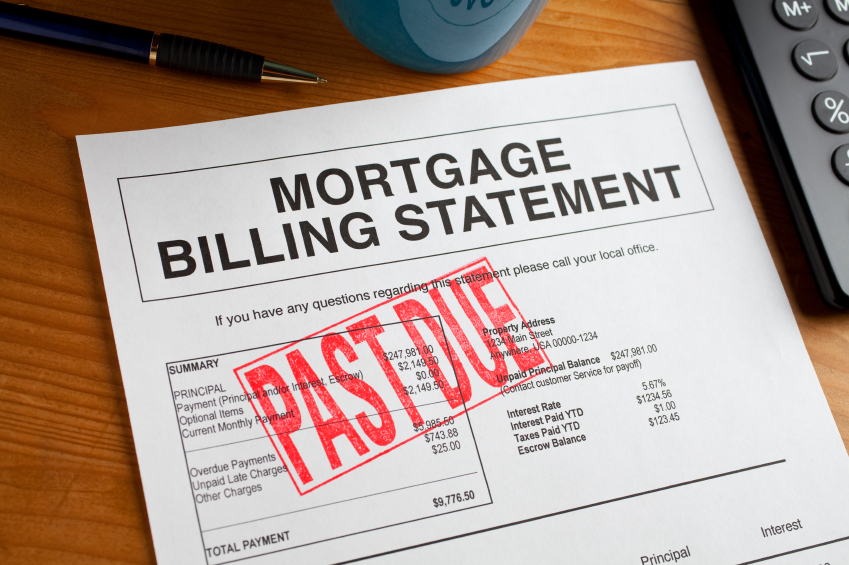
Mortgage fraud arrests have begun showing up with great regularity on Long Island. Fourteen people were charged last week with stealing $58 million in a fraud ring that involved more than 100 homes. Another 14, in a separate case brought by the Nassau County district attorney, are facing trial in October.
And there are reports of arranged sales on the rise -- cases where a homeowner falsifies a sale, effectively forcing the bank to reduce the mortgage on a home. That may sound like justice for a home that's lost value, but it's illegal, and it unfairly spreads the loss to the bank's other customers.
Why all this fraud in the news? Well, it turns out that Long Island is a hotbed for such schemes. The U.S. Treasury Department's Financial Crimes Enforcement Network says that Nassau had the fifth-highest number of suspicious reports of mortgage fraud per capita, among counties nationwide, in the third quarter of last year.
It's fascinating how people can think of different ways to make a quick, illegal buck. The convenience store robbery just doesn't compare for intrigue -- where's the imagination?
White-collar crime often involves people who had legitimate skills but at some point recognized an opportunity to cash in. In the case brought by Nassau DA Kathleen Rice in March, accused ringleaders James R. Sweet and Dwayne Benjamin were paying acquaintances $10,000 to pose as home buyers, and telling them that they were going to fix up the home and "flip" it. They portrayed it as an investment partnership.
So, the phony buyer took out a mortgage some $30,000 to $40,000 over the sale price, Rice said. The ringleaders allegedly paid off the "buyer" and pocketed the difference. There was no longer a homeowner to make payments on the house, leaving the bank to foreclose.
You can see that when home prices are rising, banks wouldn't be as unnerved by this scheme. But their sense of injury is high today. "For it to be fraud, somebody has to be damaged in some way," says Abigail Margulies, chief of the Crimes Against Real Estate unit in Rice's office, which was formed in late 2008.
Sweet and Benjamin allegedly became more brazen, eventually having people impersonate both the buyer and the seller, and swindling the bank out of the entire loan amount -- six times in one six-month period.
That's a lot of greed. More sympathetic, but just as illegal, are the homeowners whose mortgages are higher than the value of the home -- so-called underwater loans. They intentionally default on the loan and convince the lender to take less than is owed in a "short sale." In reality, the homeowner has arranged beforehand to "sell" the home to a friend for a lower price, and then continue to live in it.
The homeowner is sticking it to the bank that wouldn't renegotiate the loan. You can see how someone could justify that in their mind: "Why am I paying $4,000 a month to live in this home, when if I sold it, the new buyer could pay $1,300?"
A sense of injury runs high, and people feel they no longer need to play by the rules. Some people just walk away from underwater homes.
We'll be reading about more cases soon, says Margulies. Fraud takes a while to recognize and document. The charges being brought now are for crimes that occurred four or five years ago -- back before the 2008 crash, when there were loosey-goosey mortgage application rules about documenting employment or income.
Apparently, making loans to people who couldn't afford them was only part of the problem that led to the crash. Those loose practices also schooled would-be defrauders in how to game the system.
First published in Newsday
Bring competition to credit rating business

Official Washington was seized again yesterday by its preoccupation with the debt ceiling. But in a nearby hearing room, little noticed, the nation's opportunity to reform a key villain of the world financial meltdown was stealing away.
Credit ratings agencies, which stamped "AAA" on mortgage-backed securities that we now know were riddled with risk, are having their rules of operation discussed and rewritten through a comment period that closes on Aug. 8.
The condensed nature of this industry -- coiled into a small oligopoly of three: Standard & Poor's, Moody's and Fitch -- created the systemic risk that nearly cratered the world economy three years ago. Greater competition among credit raters would broaden the tools investors use to make decisions, and would add security to the financial markets. But it's not clear that's where we're headed.
The financial services reform legislation, Dodd-Frank, celebrated its first anniversary this month. One thing it requires is that the Federal Reserve and the Securities and Exchange Commission remove references to credit ratings agencies from their regulations and replace them with better standards for judging credit risk.
Those efforts were on display yesterday, at a hearing of the oversight subcommittee of the House Financial Services Committee. Executives from Standard & Poor's and Moody's testified. They appear prepared to accept a new operating regime, but that may be because the rules regulators are considering "create a protective barrier around the incumbent ratings agencies and . . . make them even more central to and important for the bond markets of the future."
That was a concern raised by Lawrence J. White, an economics professor from the Stern School of Business at New York University. He recommended to the subcommittee that regulators move away from allowing banks and other institutions to outsource safety judgments to credit ratings agencies. Instead, institutions should be made to justify to regulators that their investments are safe and appropriate.
White is right to shift the burden of accountability -- but I don't care to see it rest so heavily with regulators alone. Think how many times Bernie Madoff was reported to the SEC, without effect.
Fostering competition is a good and necessary tandem approach. It's how we will evolve from the systemic risks of the last decade, to individuals placing investment bets using diverse information and resources. Individuals may guess badly, but their mistakes don't metastasize to an entire industry.
James H. Gellert, chief executive of Manhattan-based Rapid Ratings International, which seeks to knock the crown off the Big Three, compared this technological moment in the credit ratings industry to the change from typewriters to computers or from whale oil to petroleum.
Gellert and the chairman of an emerging ratings firm that bears his name, Jules B. Kroll, testified that Dodd-Frank doesn't do much to promote competition, and depending on how the SEC implements the rules, could actually quash the ability of smaller competitors to offer an alternative.
Kroll stated that the cost of compliance with the new rules is "a disincentive to entering the industry."
While the debt ceiling debate continues to crowd aside other topics, it's worth noting that credit ratings agencies are the very entities that hold the power to downgrade the U.S. Treasury debt -- or tip Greece into the "default" category.
It's important that we find a room on the center stage of our attention for three companies with that much power.
First published in Newsday
Candidates vow to be faithful -- not a bad idea

A socially conservative group in Iowa, the Family Leader, has issued a 14-point "vow" it wants presidential candidates to sign. Minnesota Congresswoman Michele Bachmann quickly produced her pen, as did former Sen. Rick Santorum of Pennsylvania. But others are hesitating. The pledge has gotten some strange reviews, such as headlines announcing, "It's about slavery!" and "It's about pornography!"
So, reading the actual document was a revelation - it's better now that the absurd slavery reference has been removed. There are still some problematic points, but the first two vows won my wholehearted agreement: "Personal fidelity to my spouse" and "Respect for the marital bonds of others."
We need to start electing people who are ready to go to Washington - or Albany - to pursue the people's business, not their own egocentric meanderings.
Somehow, Americans seem to keep mistaking narcissism for leadership. We see arrogance and call it confidence or belief in one's vision. We fall for the charisma and ability to persuade - but then the dark side of these traits reveals itself in the reckless tweeting of underpants photos or the lining up of interstate hooker dates.
One would think that this country is in enough trouble to occupy the talents and energies of these politicians.
We voters would be wise to look at a candidate's motivation for running for office, as an indicator of whether he - or she - would use the position to render service to people. As I've written before, one clue could be the candidate's gender. Debbie Walsh, director of the Center for American Women and Politics at Rutgers University, says that women tend to run for office because there's a public policy issue they wish to solve, while male candidates, more often, say they've had a long-standing interest in a political career. To my ear, that's a self-centered orientation. Whether that ultimately plays out as funneling campaign money to conceal a mistress from one's dying wife, who can predict? But the better bet is with a candidate who's focused on a cause.
It's time for a call for serious people in public life - and Sen. Kirsten Gillibrand (D-N.Y.) is one voice raised. On her new website, OffTheSidelines.org, she urges women to become more involved in politics by hosting a house party, writing a letter to the editor or registering to vote. "The women's movement has stalled," she claims in a 3-minute video. Her goals are pay parity, more women elected to Congress and governors' mansions, and "the same number of women executives as assistants."
Of course, with the "donate" button placed prominently on the senator's web page, should we believe that Gillibrand's passionate appeal is entirely about helping others? No. Donations go to her re-election campaign, not to the broader cause of helping women run for office. But it may be in this case that her personal ambition and her constituents' good dovetail effectively - which is all we can really ask of a politician.
Gov. Andrew M. Cuomo is making that blend work. Riding high after a powerhouse legislative session in which he pushed through a tough new ethics law, Cuomo told an interviewer that one of his election mandates was "to reduce the scandals and embarrassments."
Of course, Albany's embarrassments have often been of a different nature than adultery. Taking bribes, stealing from health care clinics, embezzling Little League funds - New York's lawmakers eye the bottom line. But there's a common theme: We need government to get down to work, more than we have before in our lifetime.
So, let's take a second look at candidates who are willing to swear off bad behavior. They just might have their priorities straight.
First published in Newsday
Health bill threatens to bankrupt man

A year ago, Tom Carlo's back was killing him. And now it's simply threatening to send him into bankruptcy.
Carlo, 63, has struggled for more than 40 years with back pain, since falling out of the second floor of an Air Force barracks in 1968, when his unit was under attack in Vietnam. Last spring, he was unable to sit for very long because of the pain, and he was taking drugs that were wrecking his stomach. He opted for a spinal surgery -- his third -- recommended by a doctor.
The surgery was supposed to lead to a cure from pain, and Carlo has found some relief. But his financial problems were just beginning. In June, his insurance carrier, CareAllies, OK'd the operation. In July, Carlo checked into Winthrop-University Hospital in Mineola. In August, CareAllies reversed its decision and denied payment to the two surgeons who operated.
"When the insurance company gives you the OK, you figure, let's do it," Carlo said. "Two months later they told me I should have tried physical therapy or shots -- well, it's too late now."
This is an unpredictable moment in the business of medicine, with costs soaring, the federal government rewriting rules, and insurance companies and doctors vying for some control over the inevitable changes. But people like Tom Carlo, a retired U.S. Postal Service letter carrier who drives a school bus in Garden City, shouldn't have to bear the brunt of these tectonic shifts. He appears to be caught by an insurance carrier balking at astronomical fees from an out-of-network doctor.
New York, unlike other states such as New Jersey, doesn't have a law against excessive billing.
CareAllies, a unit of Cigna, provides health services under contract to the National Association of Letter Carriers. Carlo's plan is a PPO -- a preferred provider organization -- which supposedly gives him the freedom to shop around for a surgeon, provided he shoulders a greater share of the bill. PPOs often pay 70 percent of the "usual and customary" costs of out-of-network care.
The whopper surgeons' bills may have had something to do with CareAllies' change of heart. The primary surgeon billed $355,000, and the assistant surgeon $160,750. Enough to pay for Carlo's tidy Wantagh house and then some.
He has appealed the decision up the chain to the U.S. Office of Personnel Management, which is ultimately responsible for the letter carriers' insurance contract. A representative of that office didn't return phone calls for this story. In a letter to Carlo, CareAllies said that his records had been checked as part of a random audit, and that an independent reviewer had determined the surgery was not medically necessary. Winthrop Hospital and Cigna said they will look into Carlo's case.
In Nassau County, the "usual and customary" rate for this surgery would have ranged between $49,750 and $64,750, according to Empire BlueCross BlueShield. Dr. Scott Breidbart, Empire's chief medical officer, said that out-of-network billings are an area of heated dispute between insurance companies and doctors.
Normally, the insurance company and the doctor would try to negotiate. But Carlo has been appealing CareAllies' decision for 10 months. If the Office of Personnel Management denies his claim, the next resort will be to sue in federal court -- an exhausting and expensive prospect.
Carlo's tale isn't unique. Medical expenses are a leading cause of bankruptcy. But it's an example of why we need health care reform. It doesn't get much worse than having a $515,750 bill dumped in your lap.
First published in Newsday
So far, Arab Spring has been chilly for women

iStock
This year's Arab Spring uprisings against authoritarian regimes included many prominent women: There was a Tunisian blogger who was among the first to alert the world to the country's growing turmoil. And there were demonstrators, journalists, bloggers and tweeters in Egypt who forced the February ouster of President Hosni Mubarak.
But since those inspiring days, the news from this region has painted a picture of a democratic revolution only partly finished. The problem with leaving a task unfinished is that there's the danger of stalling - or leaving an opening for someone worse.
In recent days, an Egyptian general admitted that his troops conducted "virginity checks" of female protesters - a barbaric and unnecessary humiliation by the military, which now seems like a poor caretaker of power as Egypt prepares its new constitution.
But the virgin tests are only the most notorious of the setbacks for the women of the Arab Spring. Backsliding in this part of the world is particularly frightening, given its history and its cast of brutes who want a return to Islamic law. It would be tragic for another country whose women helped make revolution - like Iran in 1979 or Algeria in 1962 - to reverse course to subjugate them to a fundamentalist regime.
In Egypt especially, where the United States intervened directly by calling for Mubarak to quit, we have a moral obligation to push for results that we can support, not democracy and equality for only half the people.
Signs of anti-woman sentiment have been surfacing. One Tunisian feminist, Raja bin Salama, called for the country's new laws to be based on the United Nations' Universal Declaration of Human Rights. That document asserts that all human beings are born free and equal in dignity and rights, that we are endowed with reason and conscience, and that we should act toward one another in a spirit of kinship.
For endorsing such outrageous ideas, the head of the Tunisian Islamist party denounced bin Salama and threatened to hang her in a public square. Rashid al-Ghannouchi was living in exile when he made his threat, but has since returned to Tunisia.
In Egypt, the eight-member committee to redraft the constitution excluded women altogether. The Egyptian Center for Women's Rights is protesting the exclusion, and 102 other Egyptian women's organizations have signed on in sympathy.
Western women have a hard time comprehending societies where women can be trained as lawyers, surgeons or computer scientists - and yet be told whom to marry, or be arrested after sitting at a coffee shop with an unrelated man. For us, economic gains have resulted in many other freedoms, although unfinished revolutions await here as well.
In Saudi Arabia - which has felt the aftershocks of its neighbors' struggles toward democracy - a 32-year-old woman was arrested last month after uploading a YouTube video of herself driving a car, since Saudi women aren't allowed to drive. Her peaceful protest is reminiscent of Rosa Parks' choice of a seat at the front of the bus.
What can we do to help? We can keep these issues in the forefront by talking, blogging, tweeting, reading. A group of Saudi women is petitioning Secretary of State Hillary Clinton to help change the driving law. International diplomatic pressure can and should play a role.
Many Americans oppose our involvement in the Arab uprisings, not knowing whether the new regimes will be an improvement. We should target our involvement to be sure they are.
First published in Newsday
Peace Corps needs to do better when volunteers are raped

iStock
My grandmother didn't have much money. She was a widow who had raised five children on her husband's paycheck from the textile mill. So when she tried to give me $1,000 not to go into the Peace Corps, it was a very big offer.
I told her that I wanted to serve and that it wasn't about money. And I went - to Togo, West Africa, in 1983. My grandmother's fears were about the kind of men I would meet there. She grew queasy thinking about it. I thought her worries were as old-fashioned as her collared housedresses.
The Peace Corps now stands accused of mishandling reports of more than 1,000 sexual assaults of volunteers, including 221 rapes or attempted rapes. Because these crimes are often never reported at all - especially in countries with corrupt local police - the actual numbers of Peace Corps volunteer rape victims are probably much higher.
The organization needs to get serious about this problem, or risk fueling the anxiety of grandmothers everywhere - many of whom may succeed in keeping their progeny at home. Peace Corps director Aaron Williams has appointed a victim's advocate and is implementing better training programs.
The first step is to admit that American women are different, conveying a unique sense of freedom and entitlement. We have that reputation, too - especially those who head across the world for adventure.
In the early months of training, the Peace Corps should address directly how American women are perceived, and recommend ways to avoid giving the wrong message. This is not an effort to blame the victims of sexual assault. But volunteers should be better prepared about cultural differences. For example, we were told that in Togo, women with bare legs were thought promiscuous. Subtler sexual codes should be explored with equal frankness, even when it's embarrassing.
During congressional hearings earlier this month, former Peace Corps women testified that they had felt stalked and constantly afraid. This brings up a second point: volunteers need to be able to report problems to a trusted Peace Corps official, and have them taken seriously. There is absolutely no cause for anyone to remain in a situation where she or he feels like prey - and this should be plainly conveyed to new volunteers. The Peace Corps should document the host countries where volunteers are reporting these problems most often, and reconsider its role there.
Karestan Koenen was raped while she was a Peace Corps volunteer in Niger in the 1990s. She told Congress this month that one Peace Corps official investigating her case said to her, "I am so sick of you girls going out with men, drinking and dancing, and then when something happens, you call it rape."
Koenen testified that her treatment by the Peace Corps was worse than the rape. Every person connected with this federal program needs to take steps to ensure that this will never happen again. Such a betrayal of someone in the field is far too common in macho outfits like the Peace Corps and the armed services. The U.S. Senate is considering a bill that would give the Pentagon new tools to better prosecute sex offenders in the military.
Clearly, Koenen and her male investigator - probably mirroring women and men generally - view the question of rape very differently. Until humans agree on where the limits are, and who's to blame in every case, organizations that employ women - especially in remote and foreign locations - need to take their side and their view of such incidents.
The Peace Corps is in some measure about exporting American values. A free and savvy cadre of women volunteers, fully supported by the home staff - those are values we can defend.
First published in Newsday
High-quality child care is a good investment

iStock
The United States is sitting on a vast, untapped economic development tool that has received too little notice: our children.
Investing in children before they enter school pays dividends, and yet child care subsidies are at risk as Congress mulls questions about how to reduce the federal deficit. Before you tune this out as the same old "it's for the kids" chorus, consider:
--Children in high-quality programs are more likely to be employed -- and paying taxes -- when they reach adulthood.
--Parents who receive child care subsidies are less likely to need other forms of public assistance. A 2006 report by the Department of Health and Human Services noted that the subsidies are associated with the largest increase in employment for people formerly on welfare.
--Children who receive high-quality care, either at home or outside, are ready to succeed in school, showing a reduced need for special education programs and increased graduation rates.
--Bad child care is more likely to produce juvenile criminals. A Chicago study showed that at-risk children not enrolled in early care and education programs were 70 percent more likely to be charged with a violent crime by age 18.
This last point prompted more than 600 police chiefs, sheriffs and prosecutors -- calling themselves Fight Crime: Invest in Kids -- to write to Congress this spring, urging continued funding for Child Care Development and Block Grants. The grants are the federal government's primary child care assistance to states.
Despite a sizable budget -- $19 billion in federal and state spending in 2008 -- child care subsidies have never kept up with the need. Only a fraction of eligible families received any subsidy that year, according to the Urban Institute; most were stuck on long waiting lists.
In February, Republicans in the House proposed cutting the child care block grants by $39 million. That didn't happen, but the funding is still at risk. In the name of deficit reduction, Budget Committee Chairman Paul Ryan's (R-Wis.) plan for 2012 would reduce spending to 2008 levels. Democrats say that would cause 170,000 families trying to find or keep jobs to lose child care.
To be sure, we must get federal spending under control. But it's fair to ask our leaders to responsibly weigh the value of programs they want to cut.
Child care costs are mind-boggling. A survey by the National Association of Child Care Resource & Referral Agencies found that, in every region of the United States, the average child care fees for an infant were higher than the average amount that families spend on food. In New York, infant care at a center averages $13,630 a year.
One culprit in underfunding child care is the culture war. Often, those who believe that a parent -- a mom -- should stay home and raise children oppose child-care subsidies. But given modern economic realities, parents will work. Seventy percent of mothers with young children are employed outside the home. And census officials are predicting a boom in the number of single mothers on Long Island, as figures are released this week.
Besides, 50 years of research has found that children of working parents don't turn out to be much different from those with stay-at-home parents, at least when it comes to academic achievement and behavior. That's according to an analysis published in January in the journal Psychological Bulletin, which examined 69 child care studies conducted between 1960 and March 2010.
It's the decent thing to do to help families get on their feet and stay there, not to mention to raise a generation of kids who are prepared for success. But if decency isn't persuasive, think of all the money we'll save on special ed, public assistance and juvenile incarceration.
First published in Newsday
Lobbyists hover over Wall Street rules changes

For those of us who wonder whether Washington can erect sufficient safeguards against a future global financial meltdown, the news this week is hopeful.
The Center for Responsive Politics, an organization that tracks spending by big lobbying groups, says that Wall Street and the financial industry spent more trying to influence Washington in the first three months of 2011 than during the same period last year.
Maybe that doesn't sound like a good sign, but where there's cash, there's agita. The $27 million shelled out this year by banks, credit unions, investment firms and their trade groups signals concern that the Wall Street Reform and Consumer Protection Act of 2010 -- also known as Dodd-Frank -- will be strict.
Lobbying is up 2.7 percent, which is remarkable considering how much lobbying was going on last year, when the bill was in the heat of a Congressional debate. Lobbyists' focus has shifted to the regulatory agencies drafting the details -- expected to stretch to 5,000 pages by the time the law takes effect in July.
As the pressure mounts in the next few weeks, Americans should keep a careful watch over the process. This is an industry with a particularly strong influence -- and one that hasn't paid much of a price for the damage it's caused. The industry's intensified lobbying effort doesn't hint at a Wall Street that's chastened. Quite the opposite.
Michigan Democrat Sen. Carl Levin has just produced a report saying that Goldman Sachs executives may have misled Congress about the company's mortgage stock bets at the expense of the firm's clients. Yet the report has sparked little outcry -- save for that of hypercritic former Gov. Eliot Spitzer, now a CNN pundit, who said that Attorney General Eric Holder should resign if he does not pursue criminal charges against Goldman.
For most of Washington, though, it appears sometimes that "saving" the financial industry is more important than equal treatment under the law.
"We're going through Dodd-Frank literally line by line," said Rep. Michael Grimm (R-Staten Island), a freshman who campaigned on now-distant tea party promises to slash government spending and stop economic bailout efforts. "We don't want to be a burden on a sector that quite frankly is extremely important," he said.
Grimm is a member of the House Financial Services Committee, which is considering an industry-friendly bill that would delay implementation of rules on derivatives trading -- that wellspring of toxic assets that were so instrumental in the 2008 housing market crash.
Another bill would water down the structure of the nascent Consumer Financial Protection Bureau, replacing a single director with a five-person commission. The commission would include a maximum of three from each political party. Hello, gridlock.
The most pitched battle is over a cap on debit card swipe fees, a business that ballooned to $16.2 billion in 2009 as people have come to rely on plastic for everyday purchases. Banks and credit card companies charge retailers a fee every time someone uses a debit or prepaid card, and businesses pass those costs on to consumers through generally higher prices. All in all, it has a depressing effect on an already sluggish economy.
The average debit card transaction costs only about 4 cents to process, yet banks, MasterCard and Visa charge store owners about 44 cents per transaction. Regulators recommend a 12-cent maximum fee, which they believe is "reasonable and proportional" to the actual cost.
But reasonable and proportional may be alien concepts for people who are spending $9 million a month in campaign money, constituent visits, endorsement letters and media campaigns in legislators' home districts. Brazen -- now that's more like it.
First published in Newsday
Home-sharing's time returns

Pushed along by those twins of the Great Recession -- unemployment and foreclosure -- America may be moving back under the multigenerational roof.
At a recent reunion of high school friends, I talked to one who had returned to her mother's house, along with her brother and sister. The whole family was back together again, this time with grandchildren added to the mix. It was a disaster. The siblings were fighting as much as they had in high school.
Another friend's son was enlisting in the Army to avoid moving back into her home after graduation. The Census Bureau says that 54 million Americans were living in multigenerational families in 2010, up from 49 million two years earlier. That's the highest count since 1968.
Of course, it's nothing new for large extended families to live under one roof. In many parts of the world, it's the norm. In this country, Asians and Hispanics have higher rates of multigenerational living, perhaps reflecting greater cultural acceptance.
But for the most part, since the 1950s, the American middle class has assumed that one is up and out at 18. Each nuclear family, according to this standard, had its own home.
And that attitude can make moving back in together -- or "doubling up" in demographers' terms -- feel like a step backward. It can be a sign of financial desperation, a response to unemployment, lack of child care or health care, or affordable rents.
But there are many advantages that generations can offer one another: care-taking for the young or old, emotional support and the sharing of life lessons. Those benefits -- as well as the financial considerations -- are what led the Huntington-based Family Service League, a social services agency, to create its HomeShare program, which matches older adults with someone who could use their spare bedroom.
Artist Milton Colón, 47, heard about the program through Fountainhead Church in East Northport. He is sharing the Smithtown home of Meinhard and Aino Joks, who are 86 and 85. Colón does the laundry, cooking, bed-making and errands, allowing the Jokses to stay in their home even though their home health care benefits have run out.
In turn, the Jokses have given him shelter and stability. Colón's wife of 22 years died in 2008, of an accidental overdose, and he fell apart. He began living out of his car.
While she was alive, Colón had made a living painting portraits. He was as busy as he wanted to be -- before the recession drained his Brentwood business of customers.
The Jokses are from Estonia and Finland and tell him stories of their emigration after World War II. "I'm a World War II history buff," Colón says. "So, that's something we share. I love history. I could take it in all day."
In the evenings, he works at a basement desk on a comic strip that he's developing. It's about a proud Puerto Rican father named Flores who moves his family from Brooklyn to the suburbs -- "Flowers in Blue," Colón's own story. His new home with the Jokses not only tethers him back to family life, it gives him an artist's freedom from financial worries.
That's the facet of multigenerational living that is not often expressed. We all know about the tensions and bickering -- the fall from the ideal after having somehow slipped off the path to the single-family home. But there is sweetness, too.
So why not make the best of what, for some, has become the new American reality? With 8.8 percent unemployment and 2.36 million homes foreclosed by banks between 2007 and 2010, the middle class is struggling. Independent living may be an American value, but so is helping each other through hard times.
First published in Newsday
Are women in politics more trustworthy?

Another pair of elected officials indicted in Albany. For New Yorkers, this registers as something less than earth-rocking. Even as federal prosecutors allege "a broad-based bribery racket" involving state legislators -- State Sen. Carl Kruger and Assemb. William Boyland Jr., two Brooklyn Democrats -- our indignation is lukewarm.
We're almost accustomed to corruption. After all, the count is now at 19 state legislators removed or resigned amid scandal since 2000 -- Sens. Hiram Monserrate (D-Queens) and Pedro Espada (D-Bronx), Assemb. Tony Seminerio (D-Queens), Senate Majority Leader Joe Bruno (R-Rensselaer). All gone.
Here's another thing these recent headliners have in common: They're all men. And that makes some people wonder: Are women in public office more honest?
That's certainly the perception and is often the case, says Debbie Walsh, director of the Center for American Women and Politics at Rutgers University. She doesn't know of any count of corruption by gender. But her organization did ask the new batch of state legislators after the last election what had been their primary reason for running. Nationwide, the top motivation for women, chosen by 36 percent, was "concern for one or more specific policy issues." The men's top reason (29 percent), was "a long-standing desire to be involved in politics." That makes Walsh think ego may play a role in corruption: "You can't attribute it all to that, but maybe that's part of it."
But it's worth asking if men really are getting into trouble more often. It's true that we hear about them more -- but then again, they hold the majority of elective offices. Nationwide, women make up just 16 percent of elected officials at the federal level, and 24 percent of state offices. The New York State Legislature tracks with the national figure, roughly, at 22 percent women. And in fact, of those 19 New Yorkers who left the Assembly or Senate in the past 11 years under a cloud of wrongdoing, three were women -- about 16 percent.
"It's true in the public perception that women are more honest," says Christopher Berry, a political scientist at the University of Chicago. "But that 16 percent is not really out of step with their proportions."
In 2008, Assemb. Diane Gordon, a Brooklyn Democrat, went to prison for bribery after asking a developer to build her a $500,000 house. Assemb. Gloria Davis, a Bronx Democrat, resigned in 2003 after a bribery conviction. Former state Sen. Ada Smith (D-Brooklyn) was found guilty of harassment in 2006 for throwing a hot cup of coffee at an assistant. She ran again anyway but lost.
Other cultures have also thought about gender differences among elected leaders. India was concerned about its low number of women in public office, and in 1993 passed a rule that one-third of the 265,000 governing village councils must be chaired by women. More than a million women have since been elected to these panchayats, which oversee public services and resolve disputes ranging from marital issues to arguments over property.
One study, by Esther Duflo, an economist at the Massachusetts Institute of Technology, found that the panchayats led by women were slightly less susceptible to corruption. Villagers, on average, were 1.6 percentage points less likely to try to bribe them -- a difference so small as to be meaningless.
As more American women enter public life and attain higher elected positions, the incidence of bribe-taking and power abuse will probably even out between genders. Greed, vanity and the path of least resistance are human frailties, not gender-linked traits.
Equal, in this case, might not be better -- but it may be inevitable.
First published in Newsday
Schools challenged to cut costs, preserve quality

A couple of weeks have passed since I asked people in this space to send ideas about cutting school costs, without harming the things we all cherish -- our best teachers, high academic goals, and the extracurriculars that inspire kids to find their place in the world.
I've been overwhelmed by the response. Not so much the volume -- about 45 calls, e-mails and letters -- but by the quality. People have sent thoughtful, 4- and 5-page letters with good ideas about how to cut spending without hurting students. Former and current school superintendents, school board members, teachers and their spouses, parents -- they all want to get in on the conversation.
The response made me wonder whether, as Gov. Andrew M. Cuomo tries to target his $1.5-billion cuts to school budgets statewide this coming year, it might be worth convening a panel of informed citizens to come up with recommendations.
Here's your best advice:
--Salaries make up 60 percent to 75 percent of school spending. Freeze salaries, including the automatic yearly longevity "step" raises, and stop giving increases for extra training that, while important, adds little to classroom effectiveness -- such as courses on sexual harassment or peanut allergies.
--Give school boards more spine. Require that contract negotiations take place on a townwide, regional or statewide basis. Prohibit school districts from hiring board members' families. Stop "loading up" school boards with people who work as school administrators or teachers in neighboring districts.
--Do the math. One man wrote that his district had 6,687 students and 725 teachers. Figuring about 24 students per class . . . that leaves 446 teachers who aren't in the classroom. What are they doing, exactly? Those who wrote me seem very concerned about the large numbers of adults in schools.
--Consolidate neighborhood schools. Lawrence has closed two school buildings, netting $30 million. That money was used for maintenance to other buildings ($17 million) and a reduction in property taxes.
--Make athletics and other activities pay-to-play. Parents should pay for their kids to participate, and the group could raise money for families who can't afford it.
--Increase class sizes, especially in the upper grades. Why can't high schools use lecture halls, like colleges do? Or offer online classes?
--Charge parents whose kids are earning college credits while in high school. They would be paying the college for those credits otherwise.
--Require schools to "go green," inspiring energy savings of 10 percent or more.
--Penalize teachers who are absent a lot. (Although it's not a cost savings, another idea is to reward teachers who work in difficult school districts.)
--Put high school and college students in kindergarten and first grade classes, and give them college credit to help out.
--Consolidate school districts. This was mentioned a lot, but the political reality doesn't seem to favor it.
--Do away with universal bus service.
--Get rid of tenure.
When my family moved here in 2003, the schools were a big draw. Long Island needs to treat the quality of its schools as a treasure, even as we pare them down to a more reasonable cost.
The most depressing response when I asked for ideas about cutting school costs was this: "There have been no solutions and likely never will be any." The best? "It only takes some good ideas and those with the strength of conviction to get the job done."
So, what's it going to be, Long Island?
First published in Newsday