

Opinion: Local jail takes on substance abuse, a major cause of repeat crimes
As a society, we are rethinking why and how we incarcerate people. We're contending with a soul-crushing rise in addiction to heroin, opioids, alcohol. Localities around the country are trying new ways to fight back and to rehabilitate people who commit crimes, but whose underlying problem is addiction. This is Suffolk County's window into that transformation.
Three years ago, Sean Paddock left a bar after drinking, got into his car, started driving and nearly killed someone. He was arrested and eventually served 18 months in the Suffolk County jail in Yaphank.
None of the facts of his situation - the near-miss fatality, a confrontation with police, court appearances, outpatient rehab - resonated deeply enough for Paddock, 30, to change his ways.
But he did find hope, of all places, in jail. He told his story to a crowd gathered May 18 for a ribbon-cutting of a new addiction-treatment wing in Yaphank.

Individual jail cells can be isolating. Suffolk County, NY, is experimenting with communal cells with inmates committed to going straight.
As a society, we are rethinking why and how we incarcerate people. We're contending with a soul-crushing rise in addiction to heroin, opioids, alcohol. Localities around the country are trying new ways to fight back and to rehabilitate people who commit crimes, but whose underlying problem is addiction.
This is Suffolk County's window into that transformation. Paddock's recovery isn't common, but it offers hope.
When he entered jail, he told the gathering, "I still had a selfish mindset." After participating in the addiction program, he realized that "a lot of my addiction was around insecurities and fears and uncomfortability with who I was as a person. I started developing gratitude in the program, and a newfound love for myself."
With his mother in the crowd, Paddock called himself a felon, but now also "a true member of society."
The program is an expansion of the drunken driving treatment that was offered at the jail for years, Sheriff Vincent DeMarco said in an interview. In the past five years, the jail population has dropped dramatically, making room for a wing of the building dedicated to treatment.
The treatment program is now also offered to women, and participants are housed separately from the general population, with two 24-bed common rooms, one for each gender.
Colleen Ansanelli, a licensed social worker who runs the treatment program, said the communal rooms are a big improvement. Although the open house at the new wing was held last week, it began operating on April 15.
"Their habits are to isolate, which is fostered by the structure of a jail," Ansanelli said in an interview. "This is more of a treatment community. It's much more intimate. If somebody isn't taking their recovery seriously, the group uncovers that."
There are private rooms for one-on-one counseling, which is key to getting someone to open up. "The thing that has to change is the thinking," Ansanelli said. "We have to replace, 'I'm a loser.' "
Such cognitive behavioral therapy has become the predominant treatment for offenders in the United States and Europe, according to the National Institute of Corrections, a resource agency within the U.S. Department of Justice. Research shows that professional cognitive treatment can reduce recidivism by 25 to 35 percent, which means saving taxpayers money on incarceration.
The Suffolk program is still working out the kinks. Ansanelli had to remove four men this week and return them to the general jail population for what she termed "infecting the group with their negative thinking." Their spots will be filled quickly. The demand for treatment among the 1,270-person jail population is high. Some want to get well; others simply want to impress a judge and win an early release.
This program can't promise to turn out solid members of society, but it's better than what we've had in the past.
First published in Newsday. Anne Michaud is the Interactive Opinion Editor for Newsday.

Essay: Sadness at Anthony Weiner's demise
I wonder where we will find the next generation of political leaders if we have to screen for such a panoply of character flaws. Weiner is smart, rose from humble beginnings, and can talk circles around his opposition. All, so it seems now, gone to waste.
Although former Congressman Anthony Weiner mostly bedeviled me when I covered politics in New York City, I only feel sadness today at his political and personal demise. Any schadenfreude I felt after his first Twitter stumble in 2011, which led him to resign from Congress, has dissipated.
Partly that's a result of his repeated humiliation over time. No one deserves that -- even if he did set himself up by seeking such a high profile and insulting staff and reporters like me. The man's got an addiction, which I define as a willful self-destruction even as there are parts of one's life that are so worth showing up for. Like his vision for the middle class that he hoped to carry out as NYC mayor. Like his beautiful and extraordinary wife Huma Abedin, who filed for divorce on Friday even as Weiner was pleading guilty in the federal courthouse in Manhattan to sexting with an underage girl. Like the couple's son.
If kids don't give you a reason to be a better person, I don't know what does.
Weiner, however, even involved 4-year-old Jordan in his sext-capades. He took a suggestive image of himself for his 15-year-old sext partner as Jordan lay next to him in bed. I can only shake my head at how sad this is, how much this man in that moment was obliterating everything. Especially, but not exclusively, any image he could hold in his mind of himself as a good person.
To me, this is the nature and the bottom of addiction. Hatred of oneself creates a downward spiral, finally extinguishing decency and integrity.
In the opening lines of the documentary Weiner, for which filmmakers followed Anthony on the campaign trail for mayor in 2013, he admits to having done bad things but adds, "I've done good things, too."
I wonder where we will find the next generation of political leaders if we have to screen for such a panoply of character flaws. Narcissism, self-destructiveness, crossing the line into involving minors in one's obsession and damaging the public regard for a woman, Huma, who's a political force in her own right.
Are we, the public, supposed to overlook these flaws, as Weiner suggests, and concern ourselves with the good he might do in office? (I'm hard-pressed to find many accomplishments while he was in Washington.)
Who runs for political office in America today, at least on the highest levels, but for narcissists? Is there another motivation for public service, or are some politicians just better at hiding their self-regard? Perhaps self-regard doesn't have to be as toxic as Weiner's?
I'm sure I'm being too bleak about our political class. Weiner's felony guilty plea is depressing. He's smart, rose from humble beginnings, and can talk circles around his opposition. All, so it seems now, gone to waste.
If you liked this post, please subscribe to future updates by scrolling down on the home page. Also, please check out my book, Why They Stay: Sex Scandals, Deals, and Hidden Agendas of Nine Political Wives, published in March 2017.

Essay: Working women react to Ivanka's "Women Who Work"
I don't begrudge Ivanka for enjoying her job. I enjoy mine (most of the time). But let's not pretend that the vast majority of women don't have more practical problems.
The Cut posted a dead-on video this week of four female wage workers reading passages from First Daughter Ivanka Trump's newly published Women Who Work. The book purports to celebrate a new generation of mothers who are doing work they love, and that inspires them and allows them to pursue their passions, according to the publicity site for the book.
It's perhaps too easy to mock a privileged woman who speaks as though she can relate to the rest of us. Here's an excerpt from the video, from a woman who works as a security guard. As she begins to speak, she's holding an open copy of Ivanka's book.
I'm sorry, but this is like ... weird to me. (Reads) "By occasionally bringing my kids to the office, I'm sharing what I love to do with them." Hey this is what we can do, bring our kids and enjoy our family time at work -- and, once again, it's not reality to all parents.
Another woman questions how Ivanka can chide herself for neglecting self-care by forgoing a massage -- reminding the First Daughter that most other moms would need to pay a babysitter, pay for a massage and take time off from work. A triple hit to the wallet.
A third woman bemoaned that Ivanka writes she took just six days off of work after giving birth to her third child. Such examples undermine other choices, the speaker says, such as spending time with newborns and allowing one's body to heal.
These women in the video are asking all the right questions. It's feminism's role to rally collective action around income inequality, paid parental leave and high-quality, affordable child care.
I don't begrudge Ivanka enjoying her job. I enjoy mine (most of the time). But let's not pretend that the vast majority of women don't have more practical problems.

Opinion: Obamacare repeal, new concerns about women's health care
The continued government-sponsored enthusiasm for pregnancy has begun to look like a chapter out of "The Handmaid's Tale." The 1985 Margaret Atwood novel, recently made into a Hulu series, is set in an imaginary totalitarian future in which fertile women are required to bear children to repopulate the nation.
Washington is having another whirl with repealing and replacing Obamacare.
Lost in much news coverage of concessions to the Freedom Caucus and amassing the magic 216 House votes for passage is this: This legislation is as devastating to women's health care as the previous repeal version.
Protesters in favor of Obamacare gather outside the Supreme Court building in Washintgon. (Photo: Thomson Reuters)
The new House effort adopted Thursday in Washington mostly along party lines would eliminate the "essential health benefits" covered by the Affordable Care Act, including maternity and newborn care. The bill would pull funding for poor women to go to Planned Parenthood for birth control and lifesaving cancer screenings. It would restrict private insurance coverage of abortion.
"This latest attempt at a health care plan lacks an important component for women - health care," said Robin Chappelle Golston, president and chief executive of Planned Parenthood Empire State Acts, which represents Planned Parenthood in New York. "They say there is no war on women, but this sure looks like one."
No kidding. Before Congress could agree to an omnibus spending bill this week to keep the government running, Democrats pushed to get rid of a GOP rider that, according to House Minority Leader Nancy Pelosi, would have undermined a woman's right to reproductive health.
The continued government-sponsored enthusiasm for pregnancy has begun to look like a chapter out of "The Handmaid's Tale." The 1985 Margaret Atwood novel, recently made into a Hulu series, is set in an imaginary totalitarian future in which fertile women are required to bear children to repopulate the nation.
The bill now moves to the Senate, but Thursday's vote in Washington may light a fire under the New York State Legislature to pass measures that shore up basic health care for this state's families. It's worth emphasizing this truth: If women don't have control over their own reproductive biology, they will no longer be free.
"It's been a difficult time," Golston said of the Trump era. However, "it's a positive time in terms of people who've been activated who were not active before."
That includes Long Islanders, who have assembled at more than 65 events and demonstrations since the November election to fight for protecting reproductive rights and access to reproductive health care including contraception coverage. Planned Parenthood of Nassau County has nearly doubled its email list to 15,000. Suffolk County figures weren't immediately available.
In New York, some state lawmakers are trying to erect a bulwark against Washington action, but the efforts are in limbo. Two bills that passed the Assembly await action in the State Senate. One is the Reproductive Health Act, which would strengthen New York law to allow abortion after 24 weeks if the fetus is no longer living or the mother's health or life is at risk. That's consistent with Roe v. Wade, which New York law predates.
The odds of the Senate passing the Reproductive Health Act are dismal. But a second bill that would protect contraception coverage, the Comprehensive Contraception Coverage Act, may have a shot. Golston said Senate Democrats and the Independent Democratic Conference support it, and that Republican Sen. Elaine Phillips of Flower Hill has been "helpful." Her office confirmed she would vote for the contraception act. Originally proposed by state Attorney General Eric T. Schneiderman, the bill might be blocked by the State Senate majority coalition from coming to the floor for a vote.
The coalition should think carefully before crushing a bill that would be a backstop if the Trump administration delivers on its promise to repeal Obamacare and starve Planned Parenthood of federal funds.
First published in Newsday. Anne Michaud is the Interactive Opinion Editor for Newsday.

Q&A with Anne
A: These were all intelligent, accomplished, articulate women. It seemed off to me that they would play this subservient role to rescue their husbands’ careers.
IndieReader published a Q & A with Anne in December 2017.
1. What inspired the creation of Why They Stay?
As a political reporter, I covered a number of the men who stumbled over sex-related scandals: Bill Clinton, Eliot Spitzer, Anthony Weiner. I watched as their wives appeared on TV to defend them, or stood by them red-eyed at press conferences. These were all intelligent, accomplished, articulate women. It seemed off to me that they would play this subservient role to rescue their husbands’ careers. I began looking into their lives, and I found common themes, as well as many more examples of wives who stayed with politician-husbands who cheated. This isn’t just an American phenomenon; Why They Stay includes one Israeli and two British couples.
2. You’re an award-winning reporter. How did this influence you when writing nonfiction?
I felt it was extremely helpful to have a background in fact gathering and to understand how politics works – as much as an outsider can, perhaps. I’ve spent a lot of time with not just politicians but their aides and advisers, and the activists and lobbyists who want to influence them.
3. Whose writing do you look to for inspiration?
I’m inspired by Erik Larson, who brings to life whole eras with his fact-based books. I’m thinking of Devil in the White City. I’m inspired by radio shows such as NPR’s StoryCorps as well as the tradition of literary journalism. I think good storytelling is so important to catching and holding people’s interest, and I believe that true stories are the most fascinating.
4. Do you follow any writing rituals you’d like to share?
I remind myself at the beginning of each writing session that there will be some reluctance and resistance and even pain to get through. That’s expected, and I try to work on some lower-level tasks at the outset, such as taking notes or rewriting my previous day’s work. I know that there’s a period of getting settled into the work that I need to move through. On the other side of that period, I’m in the flow and enjoying myself – most of the time! Then, I can write. Another technique I use is to start writing first thing in the morning, when I feel most fresh and creative.
5. What do you look forward to most as you continue to promote the book?
I really enjoy the Q&A sessions with people who attend my talks. They ask the most intriguing questions, and I often sense that behind their curiosity is a question about how we all make and keep romantic commitments. I think that many more people would like to talk about “why they stay” and the ups and downs of relationships. There’s a yearning to not be quite so perfect as the Facebook version of our lives. I’m also intrigued by the idea that we are at a moment in American politics when the submissive spouse will no longer be an acceptable political cliché. I think we’re ready for political leaders who are more authentic. Absolutely including women political leaders.

Opinion: Donald Trump's antics stoke new opposition
President Donald Trump’s continuing assaults on cherished American ideals, like protecting the environment and providing health care, are having an intriguing side effect. His administration is keeping the outrage at a boil. Women, especially, are expressing interest in running for public office.
President Donald Trump’s continuing assaults on cherished American ideals, like protecting the environment and providing health care, are having an intriguing side effect. His administration is keeping the outrage at a boil.
For organizations that encourage and train women to run for political office, that has made for a very busy four months since Election Day.
Women, especially, are expressing interest in running for public office.
Activism has spiked in many areas, from demonstrations in airports to raucous town halls to protests at politicians’ doorsteps. But the events of the last few months have fundamentally changed attitudes about politics, particularly among women. Organizers say many more women are embracing the value of running for office.
VoteRunLead, a nonpartisan nonprofit organization that offers classes with titles like “30 Things Every Woman Needs to Know to Run for Office,” recently surveyed women who had signed up for the program. In the past, two-thirds of VoteRunLead’s students said they were thinking of running in the next five years or so. When their children were grown, perhaps.
Now, according to VoteRunLead founder Erin Vilardi, 66 percent want to run in the next two years.
“In the past, we heard, it’s on my mind, but it’s not urgent,” she said. “A new crop of women are raising their hands and accelerating the schedule.”
VoteRunLead, which is based in New York, unveiled a website this week under the banner “Run as you are.” An important function of groups like this is matching the skills and passions of individuals with the right offices.
“Probably, the number one question I get is what to run for,” Vilardi says. She begins by asking what policies they want to change. Most will end up seeking school board or local offices, with a sprinkling interested in federal posts.
From September 2014 to the November election, VoteRunLead trained about 5,000 women at conferences and online. Since Nov. 8, another 5,565 have signed up. Organizations like the Center for American Women and Politics at Rutgers University, She Should Run and Ignite National are reporting similar surging interest.
Even optimists thought interest might fade after the Jan. 21 women’s marches. But Anne Moses, president of Ignite National, which offers programs for high school and college women, says so far, apathy has been a stranger. “I thought maybe it would slow down,” she said, “but this administration is doing a good job of keeping people angry.”
Cue Hillary Clinton. On Tuesday, she gave a major speech in San Francisco to an audience of 6,000, and she’s scheduled today to address the Georgetown Institute for Women, Peace and Security in Washington. On Tuesday, she tried out a new mantra: “Resist, insist, persist, enlist.”
Her timing was perfect. Last week brought the image of a room of men in Congress debating whether to cover maternity care, along with Kansas Sen. Pat Roberts making light of losing mammograms. He was forced to apologize.
Such moments are raising awareness in young women that “sexism is real, it’s not just something my mom is talking about,” said Moses of Ignite National, which is based in San Francisco.
The recent ineptitude of the White House — failing on two travel bans and Obamacare repeal — also demonstrates, like a reality show, that no experience is necessary to try governing. The missteps have been liberating for potential candidates, and especially women, who research shows tend to underestimate how well-prepared they already are for jobs.
Who knew that Trump’s Washington would offer so much inspiration?
Opinion: Melania Trump goes at own pace
There's one Trump whose approval ratings are climbing fast, and it's not the guy in the Oval Office. First lady Melania Trump has picked up 16 percentage points since before the inauguration, according to a recent poll by CNN/ORC. Fifty-two percent said they have a "favorable" opinion of Trump, even as her husband's numbers remain mired in the low 40s.
Originally published in Newsday, March 17, 2017
There's one Trump whose approval ratings are climbing fast, and it's not the guy in the Oval Office.
First lady Melania Trump has picked up 16 percentage points since before the inauguration, according to a recent poll by CNN/ORC. Fifty-two percent said they have a "favorable" opinion of Trump, even as her husband's numbers remain mired in the low 40s.
Americans, it seems, are getting to know the former model from Slovenia. The same poll found that 23 percent had "no opinion" of her before President Donald Trump's inauguration; afterward, only 12 percent hadn't yet made a judgment.
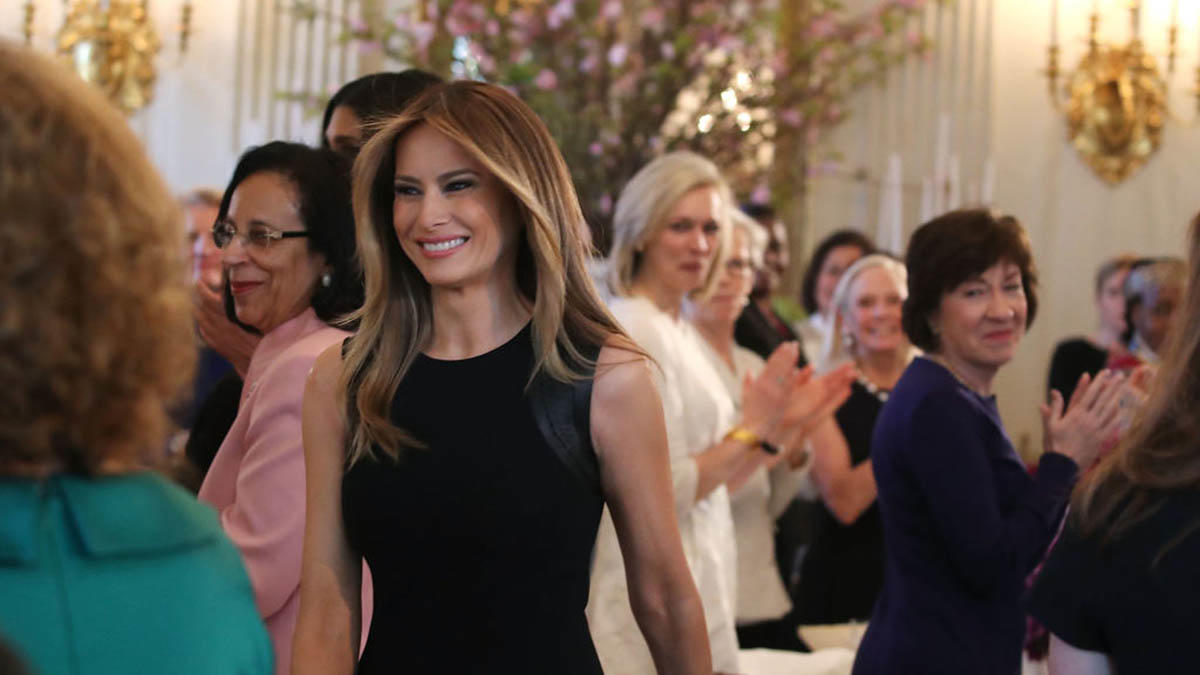
First Lady Melania Trump arrives at a luncheon she hosted to mark International Women's Day in the State Dining Room at the White House March 8, 2017. (Photo: Getty Images)
This first lady is like no other in recent memory. She had no experience in the political spotlight before landing in this high-profile, if poorly defined, role at the top of American public life. She was known in New York celebrity circles, of course, and pictured in society coverage as the wife of a publicity-loving billionaire whose name adorns skyscrapers, hotels and golf courses.
But national politics, unlike celebrity and fame, often demands more gravitas and homage to tradition. Melania Trump is navigating this all in real time, without the training wheels her predecessors had, and with a partner whose political brand is built on upending Washington norms.
Before becoming first lady, Michelle Obama was the wife of a state senator and then a U.S. senator. Laura Bush was married to a Texas governor and a member of a family steeped in politics. Hillary Clinton's husband had been the attorney general and then governor of Arkansas. Barbara Bush had a wealth of experience as the wife of a former CIA director, ambassador to China, congressman and vice president.
As political spouses, these women made mistakes and learned from them.
Trump's first major foray was publicly bruising. She was the wife of the candidate then, supporting him as he accepted the Republican Party nomination. Her speech at the convention was cribbed from her predecessor's - and the plagiarism was rightly blasted.
It's enough to make a person want to hole up in a posh Manhattan penthouse and tend to her 10-year-old son. Get back to basics.
Now, though, there are signs that Trump is testing the waters as first lady. Earlier this month, she visited a hospital in Manhattan to read to sick children. She chose the classic, "Oh, the Places You'll Go!" In the lore of first ladies, this is public relations gold.
Trump's visit cast her as nurturing and selfless, with little risk. No tyke was going to pop up and ask whether she had permission to quote Dr. Seuss.
Last week, she hosted an invitation-only luncheon at the White House in honor of International Women's Day and spoke about equality, freedom and women helping each other achieve success. Also, the Trumps will honor the 139-year-old custom next month of rolling Easter eggs across the White House South Lawn.
Step by step, Trump is adopting traditions we associate with first ladies. Her next challenge will be the gravitas.
Before Election Day, Trump said she was interested in working to combat cyberbullying, but she hasn't begun, at least not publicly. Nancy Reagan is remembered for her anti-drug message, Obama for encouraging kids to exercise and Laura Bush for reminding children to read. Must each first lady have a cause? It will be interesting to see how Trump answers that question.
For now, she's made it clear that she will remain in New York until son Barron finishes his school year. This also allows her to approach her new role with caution.
First published in Newsday. Anne Michaud is the Interactive Opinion Editor for Newsday.
Opinion: Pain relief as a habit for seniors
As the medical community and lawmakers have responded to the crisis in opioid abuse by making the pills harder to get, there's one group whose needs are being largely neglected: the elderly.
Originally published in Newsday, March 2017
As the medical community and lawmakers have responded to the crisis in opioid abuse by making the pills harder to get, there's one group whose needs are being largely neglected: the elderly.
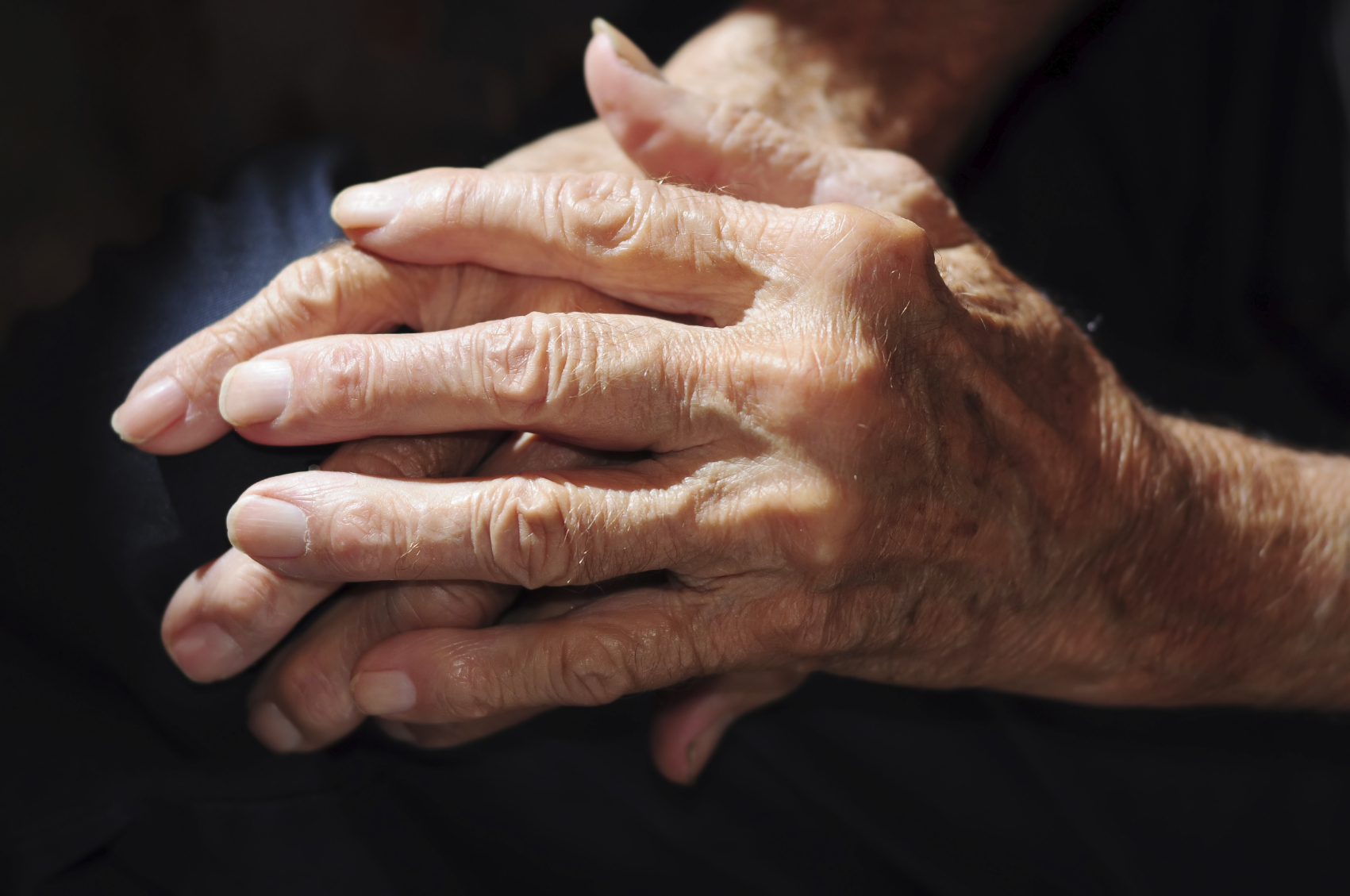
More than 30 percent of people enrolled in Medicare Part D used opioid prescriptions, according to a top Medicare administrator's report to Congress in February 2015. Older people are more apt to have chronic pain from musculoskeletal disorders like arthritis, from nerves damaged by diabetes or shingles, or from cancer. They're more likely to have surgery.
New state laws and guidelines from the federal Centers for Disease Control and Prevention, over recent months, have sought to tighten controls on who receives the pain meds and how much.
While many view opioid addiction as a youthful problem, many older Americans are struggling with dependency and pain. Alternatives to opioids aren't always clear.
I've heard from older people who say please don't allow public pressure to make these completely unavailable. They fear returning to a life of constant pain - mostly physical but sometimes also emotional. Addiction counselor Clare Waismann calls opioid use "a blanket between you and reality."
So the problem becomes, how to weigh relieving pain against the possibility that strong, habit-forming drugs derail one's quality of life? American medicine must release its dependence on popping pills and force health insurers to recognize there's a healthier path for many people.
Opioid pills decrease the pain, particularly at first. Then, as time goes on, they have less effect, and people take more to stop from hurting. The higher doses can lead to confusion and depression, even rendering people homebound. Some are misdiagnosed with dementia.
Older people also don't metabolize the drugs as well, so they stay in the body longer. Opioids can bring on vomiting or constipation, increase the risk of falls and fractures, and damage kidneys and hearts with long-term use.
Most seniors recognize the signs of growing drug dependence, but they're ashamed to talk about it, says Waismann, who runs a medical detox and treatment center in Southern California that serves older people - a rarity. They grew up in a time when drug addiction and alcoholism were viewed as evil, and so they remain silent about the problem. They don't want to identify as "drug addicts," nor do many rehab centers accept older people because of the risk of death involved as people are weaned off opioids.
Nationally, opioid prescriptions have begun to decline, and some doctors have completely stopped prescribing them. Many are recommending non-drug alternatives to manage pain, such as exercise, acupuncture, weight loss, therapy, meditation, tai chi or yoga.
Yet, insurers often don't pay for those, or for costly inpatient clinics like Waismann's.
But even without special treatment, people can speak to their doctors about slowly reducing the dosage. Waismann believes there are alternative medicines to manage muscular and nerve pain. And even at an advanced age, people should think 10 years down the road.
Waismann told me this story. An 83-year-old woman went to the clinic last month. She never had a drug problem, but over the last eight or 10 years had a number of hip and neck surgeries. She was taking more opioids but was still in pain.
She had been worried about her growing drug dependency for nearly four years but didn't know how to stop.
After detox, she was more clear-headed and able to return to driving, traveling, golfing, volunteering at a foundation and visiting with her grandchildren.
She still has a full life ahead.
First published in Newsday. Anne Michaud is the Interactive Opinion Editor for Newsday.

Opinion: Melania Trump tests First Lady waters cautiously
Trump’s visit cast her as nurturing and selfless, with little risk. No tyke was going to pop up and ask whether she had permission to quote Dr. Seuss.
There’s one Trump whose approval ratings are climbing fast, and it’s not the guy in the Oval Office.
First lady Melania Trump has picked up 16 percentage points since before the inauguration, according to a recent poll by CNN/ORC. Fifty-two percent said they have a “favorable” opinion of Trump, even as her husband’s numbers remain mired in the low 40s.
Americans, it seems, are getting to know the former model from Slovenia. The same poll found that 23 percent had “no opinion” of her before President Donald Trump’s inauguration; afterward, only 12 percent hadn’t yet made a judgment.
This first lady is like no other in recent memory. She had no experience in the political spotlight before landing in this high-profile, if poorly defined, role at the top of American public life. She was known in New York celebrity circles, of course, and pictured in society coverage as the wife of a publicity-loving billionaire whose name adorns skyscrapers, hotels and golf courses.
Trump’s visit cast her as nurturing and selfless, with little risk. No tyke was going to pop up and ask whether she had permission to quote Dr. Seuss.
But national politics, unlike celebrity and fame, often demands more gravitas and homage to tradition. Melania Trump is navigating this all in real time, without the training wheels her predecessors had, and with a partner whose political brand is built on upending Washington norms.
Before becoming first lady, Michelle Obama was the wife of a state senator and then a U.S. senator. Laura Bush was married to a Texas governor and a member of a family steeped in politics. Hillary Clinton’s husband had been the attorney general and then governor of Arkansas. Barbara Bush had a wealth of experience as the wife of a former CIA director, ambassador to China, congressman and vice president.
As political spouses, these women made mistakes in early roles and learned from them.
Trump’s first major foray was publicly bruising. She was the wife of the candidate then, supporting him as he accepted the Republican Party nomination. Her speech at the convention was cribbed from her predecessor’s — and the plagiarism was rightly blasted.
It’s enough to make a person want to hole up in a posh Manhattan penthouse and tend to her 10-year-old son. Get back to basics.
Now, though, there are signs that Trump is testing the waters as first lady. Earlier this month, she visited a hospital in Manhattan to read to sick children. She chose the classic, “Oh, the Places You’ll Go!” In the lore of first ladies, this is public relations gold.
Trump’s visit cast her as nurturing and selfless, with little risk. No tyke was going to pop up and ask whether she had permission to quote Dr. Seuss.
Last week, she hosted an invitation-only luncheon at the White House in honor of International Women’s Day and spoke about equality, freedom and women helping each other achieve success. Also, the Trumps will honor the 139-year-old custom next month of rolling Easter eggs across the White House South Lawn.
Step by step, Trump is adopting traditions we associate with first ladies. Her next challenge will be the gravitas.
Before Election Day, Trump said she was interested in working to combat cyberbullying, but she hasn’t begun, at least not publicly. Nancy Reagan is remembered for her anti-drug message, Obama for encouraging kids to exercise and Laura Bush for reminding children to read. Must each first lady have a cause? It will be interesting to see how Trump answers that question.
For now, she’s made it clear that she will remain in New York until son Barron finishes his school year. This also allows her to approach her new role with caution.
Opinion: It's necessary to keep talking about politics, religion
We're living in an age when provocation is highly rewarded. Candidate Donald Trump provoked his Republican primary competitors with epithets like "little Marco" and "low energy" Jeb Bush. In recent weeks, Milo Yiannopoulos, a website editor often identified by the title "provocateur," was rewarded with a lucrative book contract and a speaking role at the influential Conservative Political Action Conference.
Originally published in Newsday, February 2017
We're living in an age when provocation is highly rewarded.
Candidate Donald Trump provoked his Republican primary competitors with epithets like "little Marco" and "low energy" Jeb Bush. In recent weeks, Milo Yiannopoulos, a website editor often identified by the title "provocateur," was rewarded with a lucrative book contract and a speaking role at the influential Conservative Political Action Conference.

Milo Yiannopoulos is a British media personality associated with the political alt-right and a former senior editor for Breitbart News.
Until he went too far. Apparently, our society keeps redefining what "too far" means. Trump bragging about sexually assaulting women, with a newlywed wife at home, was apparently no longer enough to shock us into dumping this public figure into obscurity. Instead, voters rewarded him with the presidency.
However, Yiannopoulos was not so fortunate. After his comments about sex and teenage boys became public this week, he's out of a book contract, a job and a speaking role. For now. He has pledged to return to the spotlight, and even splashier..
I could go on about the relative outrage over female and male assault, but that's a topic for another day. What concerns me is that Americans react like Pavlov's dog, salivating over name-calling, "yuge" Twitter audiences and whatever is viral, trending, titillating, angry or divisive.
Do we no longer attend to substance? Where is the space in our lives for quieter, saner voices? Former Secretary of State James Baker on the right, or Sen. Bernie Sanders on the left? OK, Sanders isn't quiet. But you get my point. He's thoughtful. He has ideas.
A reactive, sharply divided country is what we have, and the split is serving us poorly. There are family members and important subjects we're avoiding. Popular wisdom has held that one shouldn't discuss religion or politics. However, to heal our divisions and move our country forward, it's essential that we toss out that old truism and bring politics back into our private conversations but discuss them respectfully.
Yet, as in any good arena, there must be rules. Rules allow teams of men to rush at each other on a gridiron without producing total chaos.
One useful rule would be to stop uttering phrases simply to provoke. I have no control, of course, over President Trump tweeting about "liberal activists" or a "so-called judge," but the rest of us can commit to packing away the verbal bombs in our lives. As author Don Miguel Ruiz advised, words have power; be impeccable with your word.
Another possibility I'll borrow from a long-ago conversation with Ed Rigaud, founder of the National Underground Railroad Freedom Center in Cincinnati. As he was developing the center in the late 1990s, he spoke about a room where people could converse about race, one-on-one. The idea was disconcerting, but we've reached a point of desperation in our American conversation, about both race and politics, when we should try it. Where there's discomfort, there may be growth.
A final suggestion comes from the world of project management. A facilitator runs a meeting of stakeholders, who often have competing interests. When the participants get stuck in an argument, the facilitator moves the sticking point aside - into a "parking lot," they say - so the conversation can continue productively.
A productive conversation about politics? In this environment? Dream on, you might say. But we've been stuck in the parking lot for a good while. It's time to try.
First published in Newsday. Anne Michaud is the Interactive Opinion Editor for Newsday.
Opinion: A women's agenda for Trump era
Published this month, author Lisen Stromberg's ambitious book lays out an agenda for legislative changes and describes policies that progressive employers are putting in place. The goal is to help along a new generation of men and women who say they want both involved parenting and rewarding work.
If the participants in women's marches around the country last weekend are looking for a public policy road map, they would do well to pick up a copy of "Work Pause Thrive."
Published this month, author Lisen Stromberg's ambitious book lays out an agenda for legislative changes and describes policies that progressive employers are putting in place. The goal is to help along a new generation of men and women who say they want both involved parenting and rewarding work.
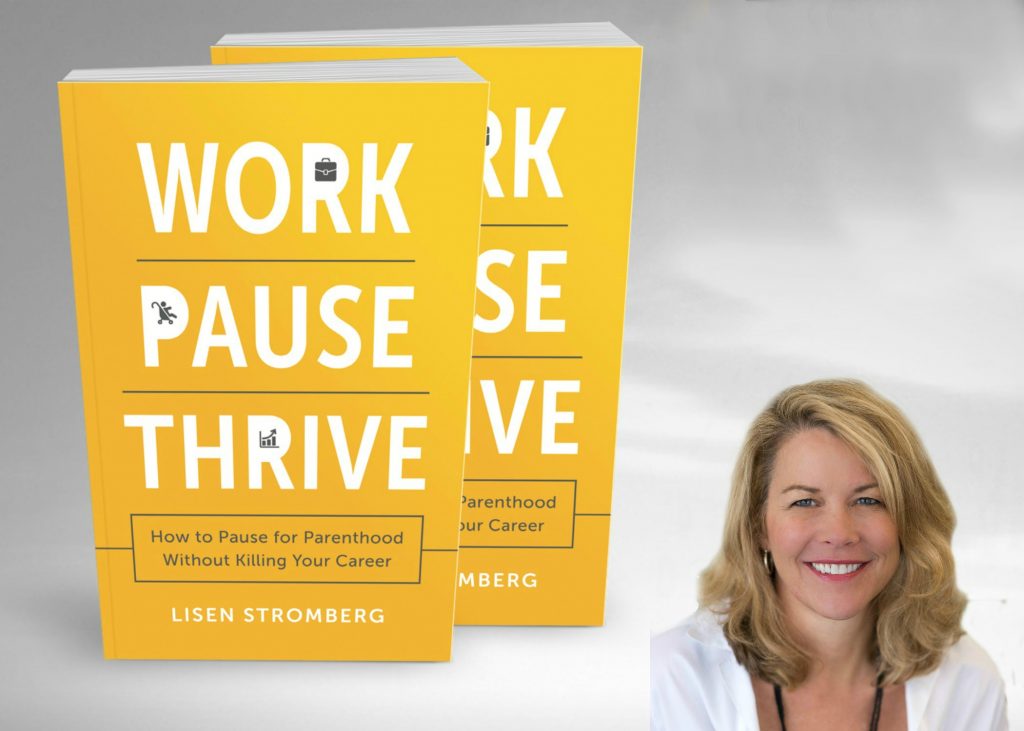
A new book from journalist Lisen Stromberg, Work Pause Thrive, offers a collective agenda for working families. (Photo: LisenStromberg.com)
As a devotee of advice on work-life balance, I found "Work Pause Thrive" dealt well with both policy and practical advice for would-be parents just starting their careers. The book navigates an economy still churning from the expansive entry of mothers into the workforce since the 1970s, without having put into place adequate affordable child care or altering the "all-in, all-the-time" workplace culture.
Stromberg tells this story from experience. She met a group of women in 1996 in a new mother training class recommended by their doctors. Twenty years later, the women are still in touch, and many of their careers look like "a direct trajectory to the top of our professions," she writes, "but buried deep within our resumes are twists and turns, pull backs and pauses."
The women crafted "nonlinear" careers that often required soul-searching, risk and straightforward negotiation with employers. But she wants the millennial generation to know it can be done - and that technology and attitudes are moving in this direction.
Putting family first for a time doesn't have to mean sacrificing one's career, according to Stromberg's survey of nearly 1,500 women. She highlighted women like Ann Fudge to make her point.
One of the most successful African-American women in business in 2001, Fudge quit her job as a division president for Kraft Foods to spend more time raising her two children. Fudge had recently been named by Fortune magazine as one of the 50 most powerful women in business.
When she left her corporate job, there was a brouhaha in the media about how she couldn't hack being both a mother and a top businesswoman.
The rest of her story received much less attention. Within a few years, she returned to work as president of the Young & Rubicam advertising agency.
Stromberg focused on college-educated women and men, she told me in an email, because that's the world she knows. "I was motivated to understand why even women with resources can't find solutions for challenges in the workplace when it comes to dealing with caregiving," she wrote.
However, middle- and lower-class families - in which Stromberg says women are increasingly opting out of paid work - would also benefit from her policy prescriptions for national paid leave, high-quality universal child care and paid sick leave.
Lower earners find it cheaper to stay home with children because they can't find work that covers the cost of child care. Meanwhile, many young parents struggle with student debt - never mind saving for college or retirement.
"We have been distracted by the notion that work/life integration is a privilege," Stromberg wrote in her email. "The reality is we lack public and workplace policies to support working parents. Let's focus on that issue and stop pitting women of different socio-economic classes against each other."
Women's Marchers, take notice.
First published in Newsday. Anne Michaud is the Interactive Opinion Editor for Newsday.
Opinion: Trump's bully pulpit: Twitter
Melania and Barron are staying in New York, and now it's not even clear that Donald Trump needs to move to the White House to make public policy. All he needs is a smartphone and a Twitter account.
Originally published in Newsday, November 2016
Melania and Barron are staying in New York, and now it's not even clear that Donald Trump needs to move to the White House to make public policy. All he needs is a smartphone and a Twitter account.
The president-elect has had a pretty good week on Twitter, nixing a backroom deal in Congress that would have defanged an ethics watchdog and nudging Ford Motor Co. to expand in Michigan instead of Mexico.

President-elect Donald Trump took to Twitter on Nov. 16, 2017 to announce that Ford Motor Co. won’t be moving Lincoln production from Kentucky to Mexico.
Why would Trump change what's working for him? Why heed Tuesday's advice from top congressional Democrat Sen. Chuck Schumer and dispense with this "Twitter presidency"?
Trump has achieved what many leaders have tried: talking around and over the news media and Congress directly to his supporters. Unfiltered to 18.6 million followers. But make no mistake, today's victories are riddled with risk.
Of course a journalist would say that, you're thinking. The press doesn't want to be made irrelevant.
But consider this: Issuing orders by tweet runs the risk of inflaming fear and setting in motion forces that Trump doesn't intend and can't control.
The late Italian novelist Umberto Eco listed fascist traits that Trump appears to have in common with former dictator Benito Mussolini: Taking action for action's sake. Dissent equated to treason. Fear of the other. Appeal to social frustration. Machismo. Selective populism.
Mussolini reigned by means of fear.
What was the motive for Ford's reversal if not the fear of a threat, which Trump has made repeatedly, that he will attach a 35 percent tariff on products made in Mexico coming into the United States? In public statements, Ford CEO Mark Fields attributed the decision to market forces and called it a "vote of confidence for President-elect Trump."
Whether he believes the 35 percent tariff will materialize or not, Fields is playing it safe. Trump's threats hold extra power at the moment, because nobody knows which of his statements he will back up once he gets into office.
House Republicans acted out of fear, as well. When Trump got wind of the plan to gut a congressional ethics panel, he tweeted, "do they really have to make the weakening of the Independent Ethics Watchdog . . . their number one act and priority."
Within two hours, House GOP leaders held an emergency meeting and dropped the plan.
One has to smile at Trump's success in reversing this secret backroom deal. Does anyone outside of Congress really want a lighter ethical touch for Washington lawmakers?
But it doesn't stretch the imagination to think congressional leaders felt threatened. Certainly, 140 characters - or even a string of tweets - isn't the best way to change minds through logical discourse. The lawmakers kowtowed to power, and that's worrisome. It doesn't feel like democracy.
Think of the times when a Trump tweet has not saved jobs or embarrassed Congress but its effect has turned the other way. The president-elect used Twitter in early December to criticize Chuck Jones, a union leader at Indiana's Carrier plant. Afterward, Jones said he received threats from Trump's supporters.
The Anti-Defamation League has reported a surge of anti-Semitic tweets directed at journalists, many of them from Trump fans.
In a nod to more traditional communication, Trump has announced that he will hold a news conference next week to talk about separating his private business interests from his new public role.
That's a step in the right direction. Complex issues like this one deserve more than 140 characters.
First published in Newsday. Anne Michaud is the Interactive Opinion Editor for Newsday.
What voter suppression brings
On his national "thank you" tour of states that voted Republican, President-elect Donald Trump gave a shout-out to an unlikely group. He claimed at an event in Michigan that African-Americans came through for him "big league," and those that didn't vote were "almost as good" in helping him win.
It was a bizarre claim, because exit polls showed that nationally, Hillary Clinton won African-American voters 89 percent to Trump's 8 percent.

Known as the "Stump for Trump Girls," Lynette Hardaway and Rochelle Richardson made waves when they endorsed Trump for president on CNN back in August. (Photo:CNN)
But coming after the first presidential election since the Voting Rights Act was gutted by the Supreme Court, Trump's claim is not only bizarre, it's Orwellian. Was he signaling to his supporters that they had done well in suppressing Democratic votes?
It's hard to know with Trump. As unscripted as he appears, he often laces his speech with music to the ears of the "alt-right," a white nationalist movement
We don't know for sure how many Americans were disenfranchised on Election Day. Some civil rights groups - the Lawyers' Committee for Civil Rights Under Law and the Leadership Conference on Civil and Human Rights - say that Republican-backed voter suppression laws probably helped tip the election in Trump's favor.
No one should vote who doesn't have that right. However, there's been almost zero evidence of voting fraud, while suppression efforts around the country have put disproportionate pressure on voters who traditionally vote Democratic: minorities, the poor, college students and other young voters.
Fourteen states had new voting restrictions this year for the first time in a presidential election, according to the Brennan Center for Justice at the NYU School of Law. These include stricter voter ID laws, more stringent registration requirements, reduced early voting and greater hurdles to restoring voting rights to people with criminal convictions.
On the face of it, these measures look like well-intentioned efforts to safeguard our democracy and the voting rights of citizens. But look a little deeper to witness how these rules are employed.
In Alabama, a driver's license or special picture ID is required at polling places. Before Election Day, eight counties with the highest percentages of nonwhite voters closed driver's license bureaus.
In Arizona, Republican election officials in Maricopa County reduced the number of polling places to 60 from 200 in 2012 and 400 in 2008. More than half the county's population is nonwhite, and one-third is Hispanic.
In North Carolina, citizen activists calling themselves the Voter Integrity Project petitioned to purge voter rolls. They sent mail to addresses in Beaufort, Cumberland and Moore counties, and tracked those that came back as undeliverable. In August and September, activists submitted some 4,500 names to the county elections boards, which canceled the voters' registrations.
Thousands of North Carolinians who tried to vote found they had been taken off the rolls, and a disproportionate number were black, said the NAACP, which has filed a federal lawsuit.
U.S. District Judge Loretta Biggs called the purge "insane," and something out of the Jim Crow era.
Yet, Trump amped up his supporters' fears with claims - wholly discredited - that "millions" voted illegally in November. Two days after he tweeted that, Michigan Republicans introduced legislation to tighten the state's already strict voter ID law.
Trump nation is ready to act on his inferences, even without evidence. How frightening is that?
First published in Newsday. Anne Michaud is the Interactive Opinion Editor for Newsday.
What now for women in politics?
Some women I know are talking about running for office. It's an attractive idea and an empowering response to a devastating turn. Many sense a new obligation to seek political power after Hillary Clinton's loss.
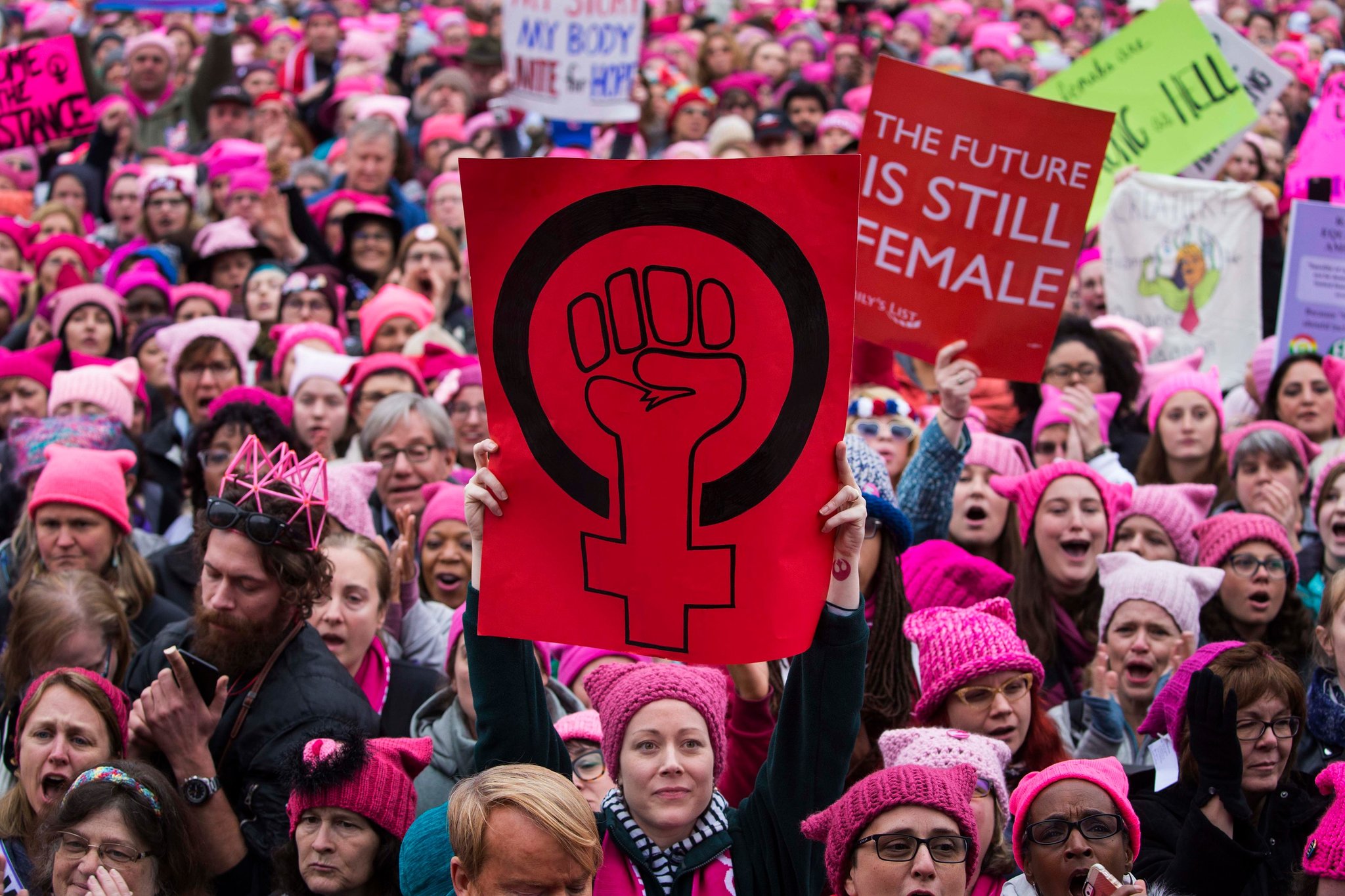
A sea of pink hats on march participants in Washington on Saturday, Jan. 21, 2017, the day after President Donald Trump's inauguration. (Photo: Ruth Fremson/The New York Times)
That's a bright silver lining to the presidential election, which many of us saw as a highly qualified woman losing to a man with no governing experience. I'm not alone in looking for that silver lining; The Associated Press and The Washington Post have written about 20- and 30-something women submitting their names for local school boards and city council seats.
And yet, the promise of women jumping into the political arena could easily be wishful thinking. In fact, the brutal 2016 election might have convinced more women that politics isn't worth it. That would be dispiriting, as I believe a feminine ethos is needed to improve education, environmental protection, health care, retirement security, and the working lives of parents and other caregivers.
As a nation, we've been at this juncture before. In the early 1990s, when Clarence Thomas was nominated to the Supreme Court, former aide Anita Hill accused him of sexual harassment in televised hearings before Congress. Outrage about how she was treated, in part, led to the election of four women to the U.S. Senate in 1992. We dubbed it "The Year of the Woman."
Twenty-four years later, it seems that great opening wasn't sustained. Come January, only 19 percent of Congress will be female.
This election year was so much harsher than 1992. T-shirts said "Trump that bitch." Fake news circulated about a Clinton aide's connection to a Washington pizza parlor that was a front for a pedophilia ring. At least some of the 42 percent of women who voted for Donald Trump believed his claim that Clinton was cynically playing the "woman card" to get elected.
Jennifer Lawless, the director of American University's Women & Politics Institute, told The Atlantic, "I think the defeat has the potential to set back female candidates' emergence. Women are less likely to think they have thick enough skin to endure the rigors of the campaign trail, and to contend that voters will vote for them, donors will give to them, and the media will cover them fairly."
Also in the silver-lining crowd is Wall Street legend Sallie Krawcheck. She says Trump's win could motivate business women to seek leadership roles. Fortune published Krawcheck's call-to-arms Tuesday in the form of a letter to her young daughter: The girl cried and vowed to "accomplish something important life," she wrote of her daughter's reaction to Clinton's loss.
Yet, even so, Krawcheck had to admit that there's "a perilously thin line of acceptable behavior" for women leaders - especially those who wear their strength and ambition boldly like Clinton.
Some countries have set quotas for women in elective office. In 1993, India amended its constitution to reserve one-third of village council seats for women. Also, one-third of council leaders, or pradhans, had to be female.
At the start, just 5 percent of council seats were held by India's women. By 2005, the experiment had exceeded its 33 percent quota, with 40 percent of seats in women's hands. The result has been a greater focus of village councils on clean water, police responsiveness, roads and education. Parents in villages that have had two female pradhans are more likely to want their daughters to study past high school. They see a potential future for them in political office. Do we?
First published in Newsday. Anne Michaud is the Interactive Opinion Editor for Newsday.

Loyalty to a cheating spouse helps tank Hillary's candidacy
To whom did Huma look for this example? Her mentor Hillary Clinton. “At the end of the day,” Abedin has said of the senior woman’s advice, “every woman should have the ability and the confidence and the choice to make whatever decisions she wants to make that are right for her and not be judged by it.”
Huma Abedin is Hillary Clinton's closest aide, and since graduating from college has held no job that wasn’t connected to this rising American political star. At Huma’s wedding in July 2010, Clinton called her a “second daughter.” That’s how close they are.
Ten months after her marriage to Anthony Weiner, on May 27, 2011, Huma’s husband was caught very publicly cheating on her via sext message. Anthony sent photo of himself, erect in gray undershorts, to a 21-year-old sext partner. By mistake, he bypassed the direct message function on Twitter and sent the pic to all 45,000 of his followers. A conservative blogger and Anthony detractor, Andrew Breitbart, got hold of the errant tweet and publicized it further to the world.
And what did Huma do? At first, she believed Anthony’s story that his Twitter account had been hacked. Within a couple of weeks, though, he told the truth. She considered their unborn child she was carrying, and she stayed with Anthony. She tried to resurrect his political career in 2013, as he ran for New York City mayor. Huma used her connection with Bill and Hillary Clinton to raise money and support for Anthony's mayoral campaign.
Such marital stoicism, in the words of journalist Jennifer Senior. And to whom did Huma look for this example? Her mentor Hillary Clinton. “At the end of the day,” Huma has said of the senior woman’s advice, “every woman should have the ability and the confidence and the choice to make whatever decisions she wants to make that are right for her and not be judged by it.”
To whom did Huma look for this example? Her mentor Hillary Clinton.
Huma stayed with Anthony until August 2016, when a fresh leak of sexts showed that he had not only continued virtual flirtations with female partners but was now referring to the couple’s toddler son, Jordan, as a “chick magnet.” At this point, Huma announced that she was separating from Anthony. But was this decision to break with a cheating man already too late?
The following month, in September 2016, the FBI learned that Anthony had been sexting with a 15-year-old girl. Given the girl's age, this was now a potential crime, and the FBI opened an investigation into Anthony's activity.
Then, with less than two weeks to go before Election Day in on Nov. 8, 2016, FBI Director James Comey announced that this investigation had revealed a new cache of emails, forwarded by Huma on Anthony’s laptop during Hillary Clinton’s tenure at the state department. Comey’s revelation reinforced public concern that Democratic presidential candidate Hillary Clinton was careless. Then, just two days before the election, Comey told Congress that the new emails contained nothing of interest in regard to Clinton—but if he intended to clear the air, Comey’s announcement had the opposite effect. It energized Donald Trump supporters to show up at the polls and vote.
We all know now how that turned out.
Aftermath of Hillary's loss
Originally published in Newsday, November 2016
For those on the left in shock or sorrow over Donald Trump's win, here is a quote worth remembering: "Ours was not a campaign, but rather an incredible and great movement."
The statement comes from Trump himself; it was part of his election night victory speech. But progressives have as much right to claim it as their own.
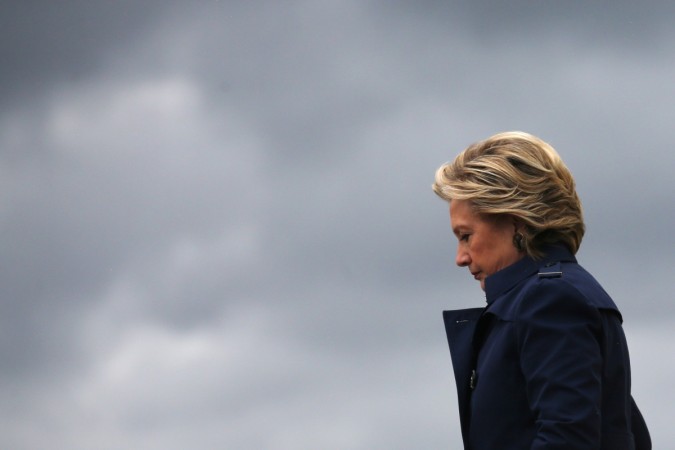
Former Democratic candidate for president Hillary Clinton (Photo: Reuters)
No, Hillary Clinton did not become America's first female president. But her candidacy was important - and contrary to the too-common narrative, many were inspired. This was a very close race. Clinton earned 59.7 million votes, and Trump won 59.5 million.
Millennial voters would have elected Clinton by an Electoral College vote of 504 to 23 had they been the only ones filling out ballots.
Granted, what we witnessed in this historic presidential race was often ugly, vulgar and obscene. Nevertheless, people were galvanized. Clinton's candidacy inspired a flash mob of 170 men and women in pantsuits in Union Square. Hundreds flocked to the Rochester grave site of suffrage activist Susan B. Anthony and placed "I voted" stickers on her tombstone. Parents took their daughters to polling places, on the campaign trail and to election eve parties.
Those opposed to Trump should not let that spirit get away but must bring it to bear in their continuing pursuit of women's rights.
In places yesterday, progressives were drawing lines in the sand. Physicians for Reproductive Health vowed to "remain vigilant," noting Trump's opposition to abortion, except in cases of rape, incest and when the mother's health is endangered.
Cecile Richards, president of Planned Parenthood, emailed supporters to say she was "Devastated. Angry. Heartbroken." But she added that the four most important words were these: "These. Doors. Stay. Open."
She was responding to Trump's pledge to defund Planned Parenthood despite its work providing women with birth control and services like breast and cervical cancer screenings. On Twitter, supporters urged others to sign up for a monthly donation plan.
Elsewhere, women celebrated electoral victories. Emily's List, which raises money for pro-abortion-rights women candidates, said a record number of women of color will be serving in Congress as a result of Tuesday's vote. Catherine Cortez Masto of Nevada was elected as the nation's first Latina senator. Kamala Harris of California, Gov. Maggie Hassan of New Hampshire and Tammy Duckworth of Illinois will all join the U.S. Senate in January.
These women, noted Jess O'Connell, executive director of Emily's List, arrive with diverse perspectives and strong voices "at a time when we've never needed them more," adding, "Their leadership will provide the checks and balances that are such a critically important part of our government, as we continue our work to achieve full equality for women."
Trump's attitude toward sexual assault will bear watching. We're all familiar with his boasts and women's accusations against him. But keep in mind that, as a nation, we are still struggling with how those in authority handle reports of sexual assault on college campuses and in the military. After a Pentagon survey found that roughly 26,000 men and women had been assaulted, Trump tweeted, "What did these geniuses expect when they put men & women together?"
Finally, progressives should hold Trump to a promise he made as a candidate to guarantee six weeks of paid leave for mothers who have just given birth.
Here's another quote worth remembering, and it comes from the gracious concession speech Clinton made yesterday morning: "This loss hurts. But please never stop believing that fighting for what's right is worth it."
First published in Newsday. Anne Michaud is the Interactive Opinion Editor for Newsday.
Hillary's path to power required Faustian bargain
From mapping a path to power to laudable notions of holding the family together, "Why They Stay" examine the uniquely challenging Faustian bargains that political wives grapple with.
Hillary Clinton couldn’t have known in 1998 how her husband’s high-profile philandering would play out. Would he be rehabilitated in the public eye? She couldn’t be sure, but she took the gamble. Had she left the marriage, today she might be the spurned wife of a retired politician instead of on the precipice to lead the free world.
Looking back on the path chosen by the nine political wives profiled in "Why They Stay: Sex Scandals, Deals, and Hidden Agendas of Nine Political Wives," we have the evidence to see a pattern—as old as the dynastic maneuverings of England’s medieval queens. The women married to the “royalty” of our times—politicians—make similar cold calculations in order to hold onto their “thrones” and their family’s history-making potential.
After covering politicians for decades as a reporter and columnist, I switched my gaze to the women behind the cheating men. Drawing from multiple sources that span the Roosevelts’ marriage to the more recent scandal involving Hillary Clinton’s closest aide Huma Abedin (wife of “sexter,” Anthony Weiner), "Why They Stay" argues that when it comes to the “power behind the throne,” women in the limelight weigh the risks and rewards. They remain loyal to their men, because of complex, often unconscious forces.
From mapping a path to power to laudable notions of holding the family together, I examine the uniquely challenging Faustian bargains that political wives grapple with, even as the public spotlight illuminates their every move.
Publishing in March 2017, Why They Stay explores the possible reasoning and motivation behind why political wives stay with their husbands after the husbands cheat. For updates on the book launch, sign up at whytheystaybook.com.

Conservative vision leaves working families scrambling
A new, comprehensive, data-driven report says the quality of U.S. child care varies from superb to needing intervention from Child Protective Services. Good luck figuring it all out on your own, American Parents.
The U.S. child care system is a patchwork of costly, scarce services with quality that can vary wildly, according to a new report that offers the most comprehensive, data-driven analysis to date.
Unfortunately, this is a problem long brewing. In 1971, Congress approved a national day care system, but President Richard Nixon vetoed the bill, saying that our country hadn’t yet had the great debate it needs on this issue.
The new study’s authors hope we’re ready now. Called the Care Index, the Sept. 28 report comes from the New America public policy institute and Care.com, the largest online market for caregiver services. The index drew from proprietary data from Care.com, a survey of 15,000 households, and figures from the Census Bureau and Child Care Aware of America, which shows families how to find quality care.
One shocking finding is that full-time care in centers for young children costs an average of $9,589 a year nationwide, which is higher than the $9,410 average cost for in-state public college tuition.
No single state scores well on the Care Index on all three measures of affordability, availability and quality. In New York, on average, child care soaks up 36 percent of household income, or 109 percent of income for those making minimum wage. Low-wage workers, therefore, turn to family, friends and neighbors to watch kids — environments that might include some learning, might consist of parking kids in front of the TV all day, or worse. Some makeshift arrangements are dangerous enough that protective services agencies step in.
One of the study’s authors, Brigid Schulte, later interviewed conservative pundit Pat Buchanan, who was working for the Nixon White House in 1971. He told her that the right wing wanted to kill not only the bill, but the very idea of child care in America, Schulte said by email.
“Part of that was the firm belief that the traditional breadwinner-homemaker family was the ‘American’ family . . . and part of it was racism,” Schulte wrote. “A conservative writer at the time warned of ‘race mixing’ in these early care and learning centers.”
Americans also are fractured over the role government should play in private life. And private employers are loath to take on the extra cost of extended paid family leave or other supports. According to another study, parents pay about 60 percent of the cost of early care and learning; federal, state and local governments subsidize 39 percent; and businesses and charities pick up just 1 percent.
There are exceptions. Manhattan-based Spotify, the music subscription service, said Wednesday it would offer 12 weeks of paid leave for a personal or family member’s medical emergency. This is a growing but still rare concession to family life. Schulte pointed out that in 25 states, it’s illegal to separate a puppy from its mother before seven weeks, yet 1 in 4 American mothers returns to work within two weeks of giving birth.
You would think the wholesale entry of mothers into the workforce in the 1990s — which propped up lower- and middle-class families — would have by now created a groundswell for better, readily available child care.
One note of optimism is that both major-party presidential candidates have spoken about improving child care — Hillary Clinton through such things as universal prekindergarten access, an expansion of the Child Tax Credit and scholarships for parents in school. Donald Trump wants to mandate six weeks of paid maternity leave and reduce costs through tax deductions and rebates.
Let’s hold them to those promises after Nov. 8.
First published in Newsday. Anne Michaud is the Interactive Opinion Editor for Newsday.

Trump articulates Rust Belt pain
Donald Trump is the only presidential candidate in a long time who has connected directly to the hurt of the region's white working class.
At the start of Tuesday night's vice-presidential debate, Democrat Tim Kaine displayed an almost Trumpian ability to interrupt his opponent. One issue on which Kaine broke in with particular defensiveness was the health of the American economy.
"Fifteen million new jobs . . .," Kaine interjected, citing statistics from the Barack Obama years. To which Republican Mike Pence rightly responded, "You can roll out numbers . . . people in Scranton know different."
Employment figures alone don't tell the whole story, especially for the great swath of the country known as the Rust Belt for its decades of shuttered mines, mills and factories. Pennsylvania, Ohio, Michigan and West Virginia come to mind - but you could find the same atmosphere in western New York. The quality of life continues to decline, as told by empty retail space, and a growing number of payday-lending shops and signs that advertise, "We pay cash for gold."
Donald Trump is the only presidential candidate in a long time who has connected directly to the hurt of the region's white working class. The solutions he's offering - withdrawing from the North American Free Trade Agreement, negotiating better trade deals, closing our borders - won't improve Rust Belt economies. But at least he is acknowledging their pain.
"Hillbilly Elegy: A Memoir of a Family and a Culture in Crisis," a popular new book by J.D. Vance, chronicles the struggles of his large Appalachian clan. He grew up in steelworking Ohio, joined the Marines, enrolled in a state university and then attended Yale Law School. Vance's voyage across cultures gives him a broad perspective.
When Trump criticizes companies that ship factory jobs overseas, when he taunts elites, when he says just what's on his mind without care for acceptable behavior, people in this part of America can relate. "What people don't understand is how truly desperate these places are," Vance told The American Conservative magazine in July. "From the Left, they get some smug condescension . . . From the Right . . . paeans to the noble businessman."
I'm familiar with Vance's world. I married into a family that came out of the coal mines in West Virginia and lives in the same mid-Ohio country he writes about in "Elegy." I spent eight years in southwestern Ohio and western Pennsylvania.
Even though I don't agree much with my in-laws about politics, I understand their visceral reaction when Hillary Clinton says, "We are going to put a lot of coal miners and coal companies out of business." Yes, she says she wants to create new, different jobs in clean energy. But it can be hard to imagine what comes next when your family loses its way of life.
People in the Midwest know what follows an industry's decimation. In Pittsburgh, a woman who watched my young children was married to a former steelworker. His pension had all but disappeared with the bankruptcy of his company, where he had worked his entire adult life. Starting out, a steelworker could anticipate health coverage and a $30,000 pension after retirement. Instead, this family was scraping by. It wasn't for a lack of work ethic. When our sitter was ill, her grown daughter or her husband would cover for her.
She often mused that she should have taken a secure county government job when she had the chance.
"Elegy" also vividly displays the social breakdown here: children raised with multiple "stepdads," and the drugs.
A 25-year-old nephew in Ohio says he's glad he graduated when he did. If he were in high school today, he told his grandmother, "I'd be dead" of heroin use.
"Trump" signs line the landscape in this part of America. He's tapping into a hopelessness we should not ignore.
First published in Newsday. Anne Michaud is the Interactive Opinion Editor for Newsday.

Opting out of standardized tests damages everyone's education
Researchers found that the typical activist is a highly educated, white, married, politically liberal parent whose household median income is well above the national average. Civil disobedience should be undertaken on behalf of people who need help, not to solidify white privilege. I don't believe that's the intention of boycotters, but it's ultimately the result.
A new survey from Teachers College at Columbia University brings some statistical scrutiny to the school-test boycott movement, which has roiled public debate on Long Island for nearly four years.
Two researchers questioned 1,641 opt-out families in 47 states for the report, "Who opts out and why?" They say it's the first systematic survey of people in the opt-out movement, which has found its national epicenter on Long Island.
Researchers found that the typical activist is a highly educated, white, married, politically liberal parent whose household median income is well above the national average.
Former U.S. Secretary of Education Arne Duncan was widely reviled in November 2013 when he described test boycotters as "white suburban moms." But it appears he was correct.
New Jersey's education commissioner put a finer point on the problem, calling the opt-out movement "a suburban phenomenon that's going to be counterproductive to helping disadvantaged kids." That is also correct.
Mostly for selfish reasons, my suburban neighbors apparently are willing to punt a well-meaning improvement that will benefit the country in global competition - as well as poorly performing, largely minority schools in the United States. Test boycotters don't want to admit that their kids need help in some areas, that their high-tax school district doesn't get an A-plus, or that teachers should be evaluated in part based on the results in their classrooms.
The survey's authors, who have expertise in the connections between education and social movements, found that 37 percent of test boycotters were very worried about the use of standardized test scores in teacher evaluations, and 45 percent of respondents said they were in the education field in some capacity.
Public education in our country should give every child an equal opportunity to succeed. Yet, throughout the United States, the quality of public schools is closely linked to property taxes, the Teachers College researchers noted.
Consequently, children in poorer communities often don't receive as high-quality schooling. In our society, and especially on racially segregated Long Island, that means that white and Asian students have better schools, in general, than black and Hispanic students.
Federally mandated annual assessments should unmask these disparities. That's why leading civil rights organizations are strongly in favor of the tests. Grades given classroom by classroom are impossible to compare from one school district to another, never mind across state lines.
Opt-out activists told the Teachers College researchers that their refusal to participate in the testing is a proxy for larger conflicts around the direction of education policy. They said it's an act of civil disobedience. Last year, 20 percent of students in New York and more than 50 percent of those on Long Island boycotted these math and English tests for kids in grades 3 through 8.
Civil disobedience should be undertaken on behalf of people who need help, not to solidify white privilege. I don't believe that's the intention of boycotters, but it's ultimately the result.
As someone who cares about social justice, I can't bear to witness how this movement is deepening our divides: well-off versus poor, white and Asian versus Hispanic and black.
If people want to opt out of public education, there are scores of private schools that follow "whole child" and other alternative philosophies. Test boycotters should opt into Waldorf or Montessori rather than disrupt a national effort to level public schooling.
First published in Newsday. Anne Michaud is the Interactive Opinion Editor for Newsday.