What America won’t do
91 other nations have elected a woman to the highest office. What about the U.S.?
First published in Ms., April 27, 2021
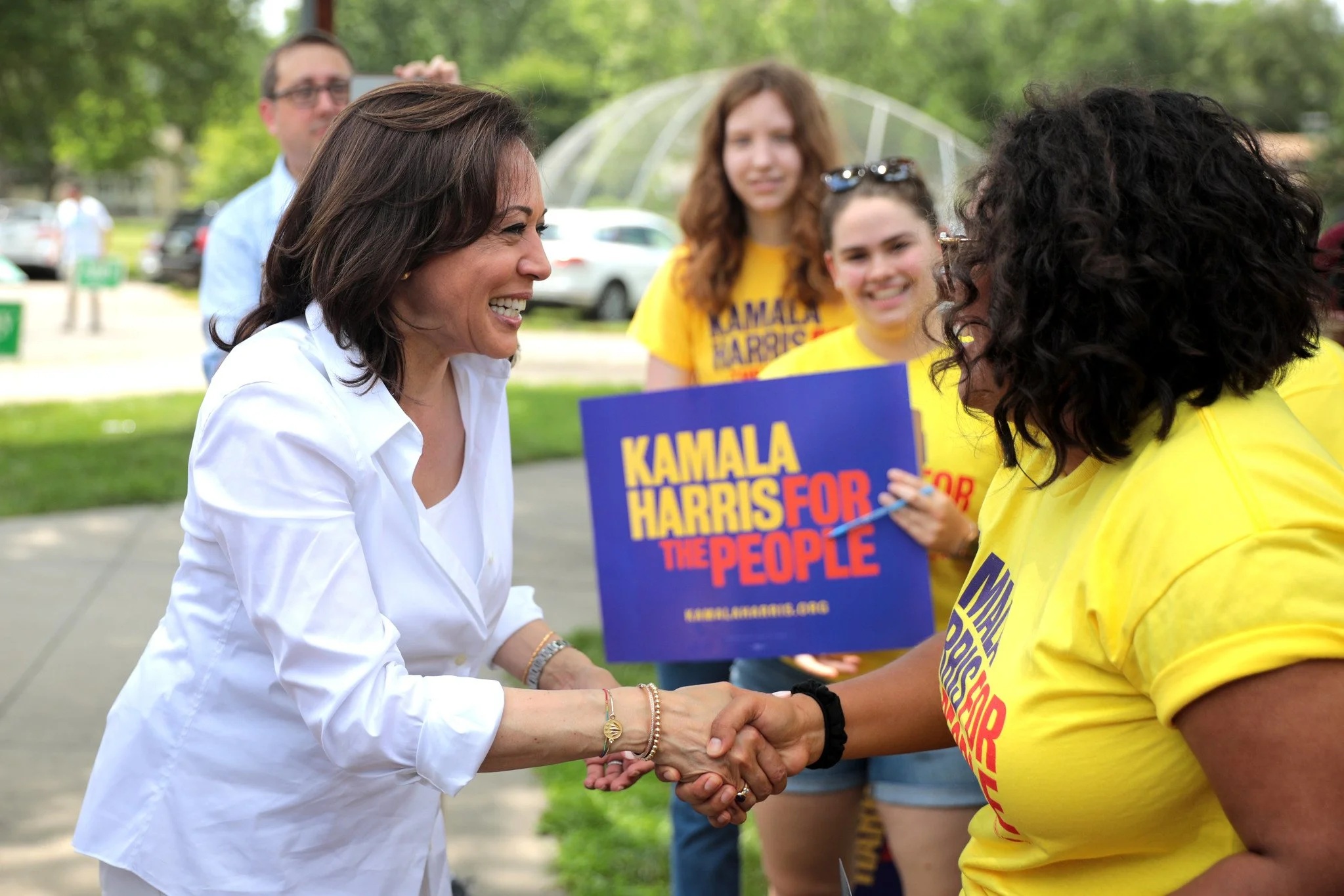
“Each time the United States has a new first,” writes Michaud, “I wonder how many more countries have pulled ahead of us with a female chief executive. Seven were elected last year.” (Gage Skidmore / Flickr)
The election of Kamala Harris to the vice presidency has been greeted by a welcome, if predictable, flood of accolades. I’ve come to think of them as a chorus of firsts. First woman, first Black woman, first South Asian American and first mom … to hold this lofty post.
People say that their daughters can now picture themselves in Vice President Harris’s place, achieving similar heights.
Forgive me if the chorus of firsts leaves me a bit glass-half-empty. Wikipedia lists 91 countries where women have been elected as heads of state, heads of government, or both. Little girls growing up in Panama have been able to picture themselves leading that nation since 1999. That’s when Mireya Moscoso took office as president.
If Vice President Harris, who was born in 1964, had lived in Sri Lanka, she would have been governed by a female prime minister, Sirimavo Bandaranaike. She led what was then known as Ceylon from 1960 to 1965.
I think about this list of women leaders from time to time. Each time the United States has a new first—first woman running on a major party ticket (Hillary Clinton), six women vying for their party’s nomination (2020)—I wonder how many more countries have pulled ahead of us with a female chief executive. Seven were elected last year.
I nurse a suspicion that there is something different about American politics, or our society, that makes it so hard for a woman to break through. Is there some cowboy-ness that haunts our national psyche? Some macho bootstraps rugged individualism threading through our fabric that suppresses women?
Harris’s “Chorus of Firsts”
As soon as President Joe Biden announced his choice of Harris, crude remarks about her began showing up on internet chats. People coined the term “heels up Harris,” in reference to her years-ago relationship with then-California Assembly Speaker Willie Brown. They made snide remarks about her sleeping her way to the top.
Brown did appoint Harris to two commissions: the state Unemployment Insurance Appeals Board and the California Medical Assistance Commission. However, she went on to win election and then re-elections as San Francisco District Attorney; election and then re-election as California Attorney General; and election as a U.S. senator from California in 2016. Willie Brown did not personally twist the arms of 7.5 million California voters.
The chorus of firsts has risen to Harris’s defense, but in a way that undermines her at the same time. In my opinion, they are focused on the wrong things.
Take the February print cover of Vogue, for example. Harris is depicted in street clothes: a dark blazer, black ankle-length pants and Converse Chuck Taylor sneakers. Vogue chose this photo over another of Harris in a pale blue power suit, which the magazine published with its online story.
Kamala Harris is Vogue’s February 2020 cover star 💗💚 pic.twitter.com/49avubOInF
— Blk Girl Culture (@blkgirlculture) January 10, 2021
Writer Karen Attiah argued in The Washington Post that the photo choice revealed a white patriarchal power elite uncomfortable with Black accomplishment.
Granted, politicians of color face special hurdles in the United States. I covered the New York City mayoral race as a reporter in 2005, and I heard this story from candidate Fernando Ferrer’s advisers about his photo shoot at the New York Times. He arrived wearing a Guayabera, a traditional style for men in Puerto Rico, and posed for a couple of pictures. Then he changed into a business suit for the bulk of the shoot. The Times ran the Guayabera shot.
That said, I find the focus on women’s clothing distasteful. Quick, what’s the first thing you know about White House coronavirus honcho Deborah Birx? The scarves, right? Commentaries on Hillary Clinton’s hairstyles and pantsuits have emptied barrels of ink.
Much less attention goes to the recently passed Senate bill Harris co-sponsored, to help border regions identify the remains of missing migrants—a matter of far more weight. I admire the symbolism of women wearing white to commemorate suffrage or black in support of #MeToo. But let’s maintain a sense of proportion.