
Opinion: A women's agenda for Trump era
Published this month, author Lisen Stromberg's ambitious book lays out an agenda for legislative changes and describes policies that progressive employers are putting in place. The goal is to help along a new generation of men and women who say they want both involved parenting and rewarding work.
If the participants in women's marches around the country last weekend are looking for a public policy road map, they would do well to pick up a copy of "Work Pause Thrive."
Published this month, author Lisen Stromberg's ambitious book lays out an agenda for legislative changes and describes policies that progressive employers are putting in place. The goal is to help along a new generation of men and women who say they want both involved parenting and rewarding work.
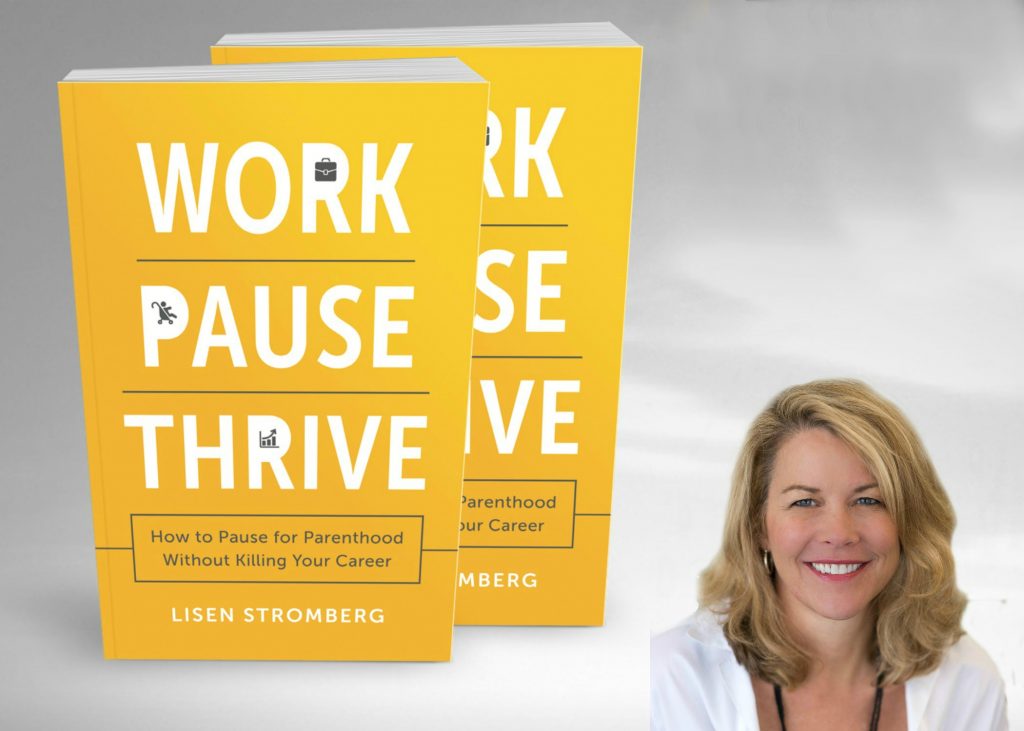
A new book from journalist Lisen Stromberg, Work Pause Thrive, offers a collective agenda for working families. (Photo: LisenStromberg.com)
As a devotee of advice on work-life balance, I found "Work Pause Thrive" dealt well with both policy and practical advice for would-be parents just starting their careers. The book navigates an economy still churning from the expansive entry of mothers into the workforce since the 1970s, without having put into place adequate affordable child care or altering the "all-in, all-the-time" workplace culture.
Stromberg tells this story from experience. She met a group of women in 1996 in a new mother training class recommended by their doctors. Twenty years later, the women are still in touch, and many of their careers look like "a direct trajectory to the top of our professions," she writes, "but buried deep within our resumes are twists and turns, pull backs and pauses."
The women crafted "nonlinear" careers that often required soul-searching, risk and straightforward negotiation with employers. But she wants the millennial generation to know it can be done - and that technology and attitudes are moving in this direction.
Putting family first for a time doesn't have to mean sacrificing one's career, according to Stromberg's survey of nearly 1,500 women. She highlighted women like Ann Fudge to make her point.
One of the most successful African-American women in business in 2001, Fudge quit her job as a division president for Kraft Foods to spend more time raising her two children. Fudge had recently been named by Fortune magazine as one of the 50 most powerful women in business.
When she left her corporate job, there was a brouhaha in the media about how she couldn't hack being both a mother and a top businesswoman.
The rest of her story received much less attention. Within a few years, she returned to work as president of the Young & Rubicam advertising agency.
Stromberg focused on college-educated women and men, she told me in an email, because that's the world she knows. "I was motivated to understand why even women with resources can't find solutions for challenges in the workplace when it comes to dealing with caregiving," she wrote.
However, middle- and lower-class families - in which Stromberg says women are increasingly opting out of paid work - would also benefit from her policy prescriptions for national paid leave, high-quality universal child care and paid sick leave.
Lower earners find it cheaper to stay home with children because they can't find work that covers the cost of child care. Meanwhile, many young parents struggle with student debt - never mind saving for college or retirement.
"We have been distracted by the notion that work/life integration is a privilege," Stromberg wrote in her email. "The reality is we lack public and workplace policies to support working parents. Let's focus on that issue and stop pitting women of different socio-economic classes against each other."
Women's Marchers, take notice.
First published in Newsday. Anne Michaud is the Interactive Opinion Editor for Newsday.
What now for women in politics?
Some women I know are talking about running for office. It's an attractive idea and an empowering response to a devastating turn. Many sense a new obligation to seek political power after Hillary Clinton's loss.
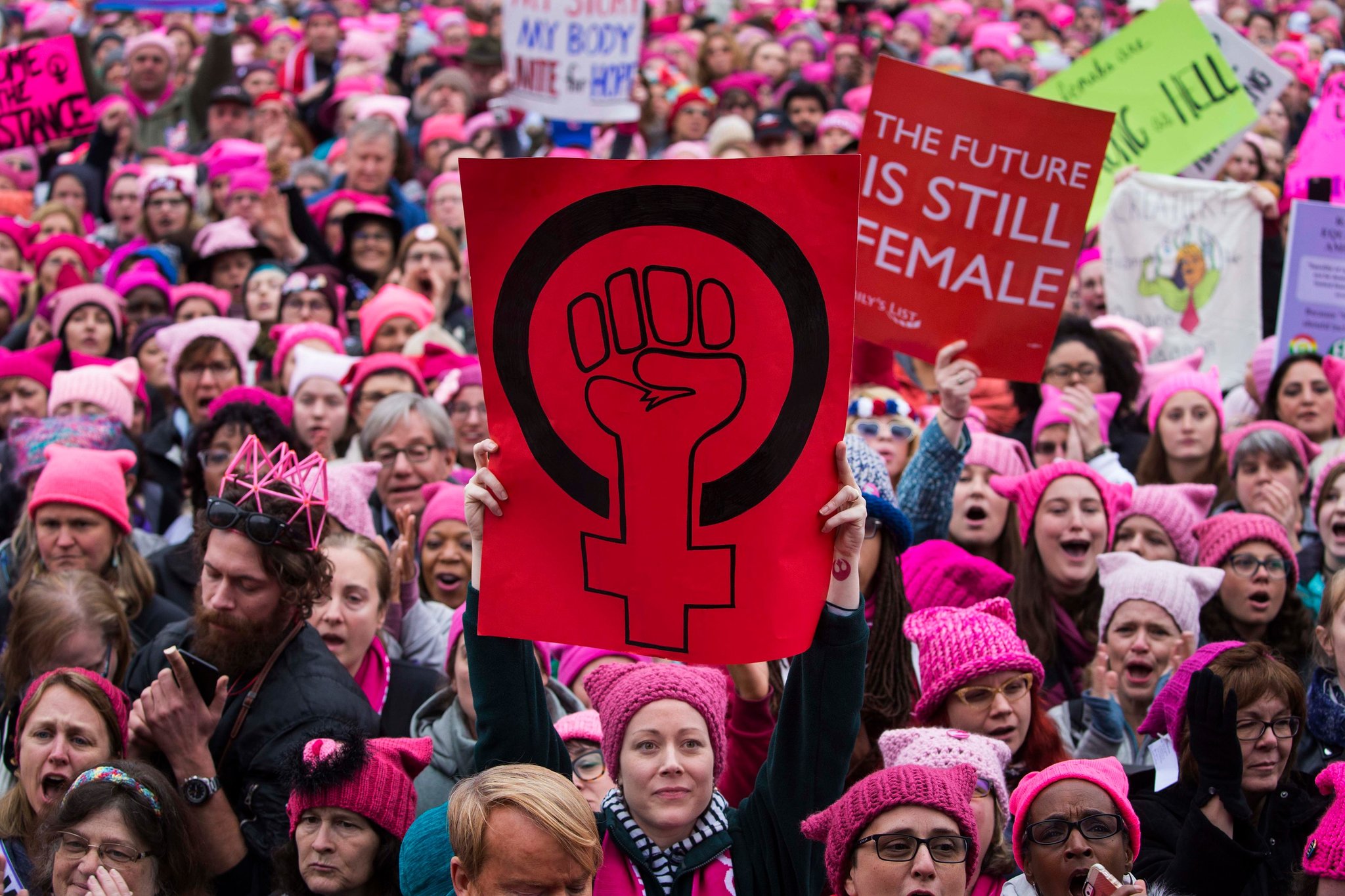
A sea of pink hats on march participants in Washington on Saturday, Jan. 21, 2017, the day after President Donald Trump's inauguration. (Photo: Ruth Fremson/The New York Times)
That's a bright silver lining to the presidential election, which many of us saw as a highly qualified woman losing to a man with no governing experience. I'm not alone in looking for that silver lining; The Associated Press and The Washington Post have written about 20- and 30-something women submitting their names for local school boards and city council seats.
And yet, the promise of women jumping into the political arena could easily be wishful thinking. In fact, the brutal 2016 election might have convinced more women that politics isn't worth it. That would be dispiriting, as I believe a feminine ethos is needed to improve education, environmental protection, health care, retirement security, and the working lives of parents and other caregivers.
As a nation, we've been at this juncture before. In the early 1990s, when Clarence Thomas was nominated to the Supreme Court, former aide Anita Hill accused him of sexual harassment in televised hearings before Congress. Outrage about how she was treated, in part, led to the election of four women to the U.S. Senate in 1992. We dubbed it "The Year of the Woman."
Twenty-four years later, it seems that great opening wasn't sustained. Come January, only 19 percent of Congress will be female.
This election year was so much harsher than 1992. T-shirts said "Trump that bitch." Fake news circulated about a Clinton aide's connection to a Washington pizza parlor that was a front for a pedophilia ring. At least some of the 42 percent of women who voted for Donald Trump believed his claim that Clinton was cynically playing the "woman card" to get elected.
Jennifer Lawless, the director of American University's Women & Politics Institute, told The Atlantic, "I think the defeat has the potential to set back female candidates' emergence. Women are less likely to think they have thick enough skin to endure the rigors of the campaign trail, and to contend that voters will vote for them, donors will give to them, and the media will cover them fairly."
Also in the silver-lining crowd is Wall Street legend Sallie Krawcheck. She says Trump's win could motivate business women to seek leadership roles. Fortune published Krawcheck's call-to-arms Tuesday in the form of a letter to her young daughter: The girl cried and vowed to "accomplish something important life," she wrote of her daughter's reaction to Clinton's loss.
Yet, even so, Krawcheck had to admit that there's "a perilously thin line of acceptable behavior" for women leaders - especially those who wear their strength and ambition boldly like Clinton.
Some countries have set quotas for women in elective office. In 1993, India amended its constitution to reserve one-third of village council seats for women. Also, one-third of council leaders, or pradhans, had to be female.
At the start, just 5 percent of council seats were held by India's women. By 2005, the experiment had exceeded its 33 percent quota, with 40 percent of seats in women's hands. The result has been a greater focus of village councils on clean water, police responsiveness, roads and education. Parents in villages that have had two female pradhans are more likely to want their daughters to study past high school. They see a potential future for them in political office. Do we?
First published in Newsday. Anne Michaud is the Interactive Opinion Editor for Newsday.
Aftermath of Hillary's loss
Originally published in Newsday, November 2016
For those on the left in shock or sorrow over Donald Trump's win, here is a quote worth remembering: "Ours was not a campaign, but rather an incredible and great movement."
The statement comes from Trump himself; it was part of his election night victory speech. But progressives have as much right to claim it as their own.
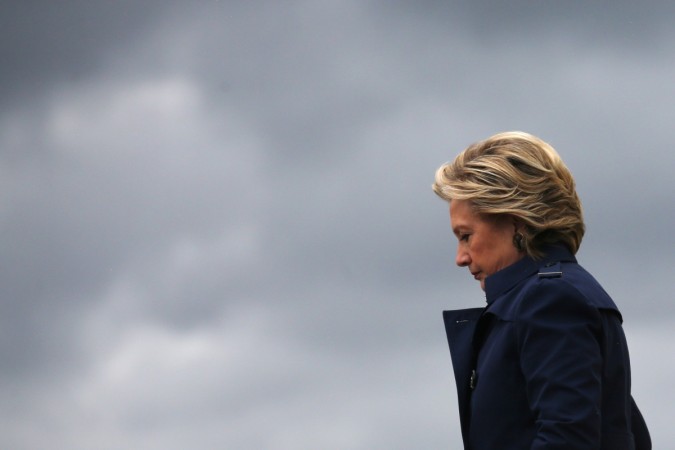
Former Democratic candidate for president Hillary Clinton (Photo: Reuters)
No, Hillary Clinton did not become America's first female president. But her candidacy was important - and contrary to the too-common narrative, many were inspired. This was a very close race. Clinton earned 59.7 million votes, and Trump won 59.5 million.
Millennial voters would have elected Clinton by an Electoral College vote of 504 to 23 had they been the only ones filling out ballots.
Granted, what we witnessed in this historic presidential race was often ugly, vulgar and obscene. Nevertheless, people were galvanized. Clinton's candidacy inspired a flash mob of 170 men and women in pantsuits in Union Square. Hundreds flocked to the Rochester grave site of suffrage activist Susan B. Anthony and placed "I voted" stickers on her tombstone. Parents took their daughters to polling places, on the campaign trail and to election eve parties.
Those opposed to Trump should not let that spirit get away but must bring it to bear in their continuing pursuit of women's rights.
In places yesterday, progressives were drawing lines in the sand. Physicians for Reproductive Health vowed to "remain vigilant," noting Trump's opposition to abortion, except in cases of rape, incest and when the mother's health is endangered.
Cecile Richards, president of Planned Parenthood, emailed supporters to say she was "Devastated. Angry. Heartbroken." But she added that the four most important words were these: "These. Doors. Stay. Open."
She was responding to Trump's pledge to defund Planned Parenthood despite its work providing women with birth control and services like breast and cervical cancer screenings. On Twitter, supporters urged others to sign up for a monthly donation plan.
Elsewhere, women celebrated electoral victories. Emily's List, which raises money for pro-abortion-rights women candidates, said a record number of women of color will be serving in Congress as a result of Tuesday's vote. Catherine Cortez Masto of Nevada was elected as the nation's first Latina senator. Kamala Harris of California, Gov. Maggie Hassan of New Hampshire and Tammy Duckworth of Illinois will all join the U.S. Senate in January.
These women, noted Jess O'Connell, executive director of Emily's List, arrive with diverse perspectives and strong voices "at a time when we've never needed them more," adding, "Their leadership will provide the checks and balances that are such a critically important part of our government, as we continue our work to achieve full equality for women."
Trump's attitude toward sexual assault will bear watching. We're all familiar with his boasts and women's accusations against him. But keep in mind that, as a nation, we are still struggling with how those in authority handle reports of sexual assault on college campuses and in the military. After a Pentagon survey found that roughly 26,000 men and women had been assaulted, Trump tweeted, "What did these geniuses expect when they put men & women together?"
Finally, progressives should hold Trump to a promise he made as a candidate to guarantee six weeks of paid leave for mothers who have just given birth.
Here's another quote worth remembering, and it comes from the gracious concession speech Clinton made yesterday morning: "This loss hurts. But please never stop believing that fighting for what's right is worth it."
First published in Newsday. Anne Michaud is the Interactive Opinion Editor for Newsday.