

Opinion: Donald Trump's antics stoke new opposition
President Donald Trump’s continuing assaults on cherished American ideals, like protecting the environment and providing health care, are having an intriguing side effect. His administration is keeping the outrage at a boil. Women, especially, are expressing interest in running for public office.
President Donald Trump’s continuing assaults on cherished American ideals, like protecting the environment and providing health care, are having an intriguing side effect. His administration is keeping the outrage at a boil.
For organizations that encourage and train women to run for political office, that has made for a very busy four months since Election Day.
Women, especially, are expressing interest in running for public office.
Activism has spiked in many areas, from demonstrations in airports to raucous town halls to protests at politicians’ doorsteps. But the events of the last few months have fundamentally changed attitudes about politics, particularly among women. Organizers say many more women are embracing the value of running for office.
VoteRunLead, a nonpartisan nonprofit organization that offers classes with titles like “30 Things Every Woman Needs to Know to Run for Office,” recently surveyed women who had signed up for the program. In the past, two-thirds of VoteRunLead’s students said they were thinking of running in the next five years or so. When their children were grown, perhaps.
Now, according to VoteRunLead founder Erin Vilardi, 66 percent want to run in the next two years.
“In the past, we heard, it’s on my mind, but it’s not urgent,” she said. “A new crop of women are raising their hands and accelerating the schedule.”
VoteRunLead, which is based in New York, unveiled a website this week under the banner “Run as you are.” An important function of groups like this is matching the skills and passions of individuals with the right offices.
“Probably, the number one question I get is what to run for,” Vilardi says. She begins by asking what policies they want to change. Most will end up seeking school board or local offices, with a sprinkling interested in federal posts.
From September 2014 to the November election, VoteRunLead trained about 5,000 women at conferences and online. Since Nov. 8, another 5,565 have signed up. Organizations like the Center for American Women and Politics at Rutgers University, She Should Run and Ignite National are reporting similar surging interest.
Even optimists thought interest might fade after the Jan. 21 women’s marches. But Anne Moses, president of Ignite National, which offers programs for high school and college women, says so far, apathy has been a stranger. “I thought maybe it would slow down,” she said, “but this administration is doing a good job of keeping people angry.”
Cue Hillary Clinton. On Tuesday, she gave a major speech in San Francisco to an audience of 6,000, and she’s scheduled today to address the Georgetown Institute for Women, Peace and Security in Washington. On Tuesday, she tried out a new mantra: “Resist, insist, persist, enlist.”
Her timing was perfect. Last week brought the image of a room of men in Congress debating whether to cover maternity care, along with Kansas Sen. Pat Roberts making light of losing mammograms. He was forced to apologize.
Such moments are raising awareness in young women that “sexism is real, it’s not just something my mom is talking about,” said Moses of Ignite National, which is based in San Francisco.
The recent ineptitude of the White House — failing on two travel bans and Obamacare repeal — also demonstrates, like a reality show, that no experience is necessary to try governing. The missteps have been liberating for potential candidates, and especially women, who research shows tend to underestimate how well-prepared they already are for jobs.
Who knew that Trump’s Washington would offer so much inspiration?
What voter suppression brings
On his national "thank you" tour of states that voted Republican, President-elect Donald Trump gave a shout-out to an unlikely group. He claimed at an event in Michigan that African-Americans came through for him "big league," and those that didn't vote were "almost as good" in helping him win.
It was a bizarre claim, because exit polls showed that nationally, Hillary Clinton won African-American voters 89 percent to Trump's 8 percent.

Known as the "Stump for Trump Girls," Lynette Hardaway and Rochelle Richardson made waves when they endorsed Trump for president on CNN back in August. (Photo:CNN)
But coming after the first presidential election since the Voting Rights Act was gutted by the Supreme Court, Trump's claim is not only bizarre, it's Orwellian. Was he signaling to his supporters that they had done well in suppressing Democratic votes?
It's hard to know with Trump. As unscripted as he appears, he often laces his speech with music to the ears of the "alt-right," a white nationalist movement
We don't know for sure how many Americans were disenfranchised on Election Day. Some civil rights groups - the Lawyers' Committee for Civil Rights Under Law and the Leadership Conference on Civil and Human Rights - say that Republican-backed voter suppression laws probably helped tip the election in Trump's favor.
No one should vote who doesn't have that right. However, there's been almost zero evidence of voting fraud, while suppression efforts around the country have put disproportionate pressure on voters who traditionally vote Democratic: minorities, the poor, college students and other young voters.
Fourteen states had new voting restrictions this year for the first time in a presidential election, according to the Brennan Center for Justice at the NYU School of Law. These include stricter voter ID laws, more stringent registration requirements, reduced early voting and greater hurdles to restoring voting rights to people with criminal convictions.
On the face of it, these measures look like well-intentioned efforts to safeguard our democracy and the voting rights of citizens. But look a little deeper to witness how these rules are employed.
In Alabama, a driver's license or special picture ID is required at polling places. Before Election Day, eight counties with the highest percentages of nonwhite voters closed driver's license bureaus.
In Arizona, Republican election officials in Maricopa County reduced the number of polling places to 60 from 200 in 2012 and 400 in 2008. More than half the county's population is nonwhite, and one-third is Hispanic.
In North Carolina, citizen activists calling themselves the Voter Integrity Project petitioned to purge voter rolls. They sent mail to addresses in Beaufort, Cumberland and Moore counties, and tracked those that came back as undeliverable. In August and September, activists submitted some 4,500 names to the county elections boards, which canceled the voters' registrations.
Thousands of North Carolinians who tried to vote found they had been taken off the rolls, and a disproportionate number were black, said the NAACP, which has filed a federal lawsuit.
U.S. District Judge Loretta Biggs called the purge "insane," and something out of the Jim Crow era.
Yet, Trump amped up his supporters' fears with claims - wholly discredited - that "millions" voted illegally in November. Two days after he tweeted that, Michigan Republicans introduced legislation to tighten the state's already strict voter ID law.
Trump nation is ready to act on his inferences, even without evidence. How frightening is that?
First published in Newsday. Anne Michaud is the Interactive Opinion Editor for Newsday.
What now for women in politics?
Some women I know are talking about running for office. It's an attractive idea and an empowering response to a devastating turn. Many sense a new obligation to seek political power after Hillary Clinton's loss.
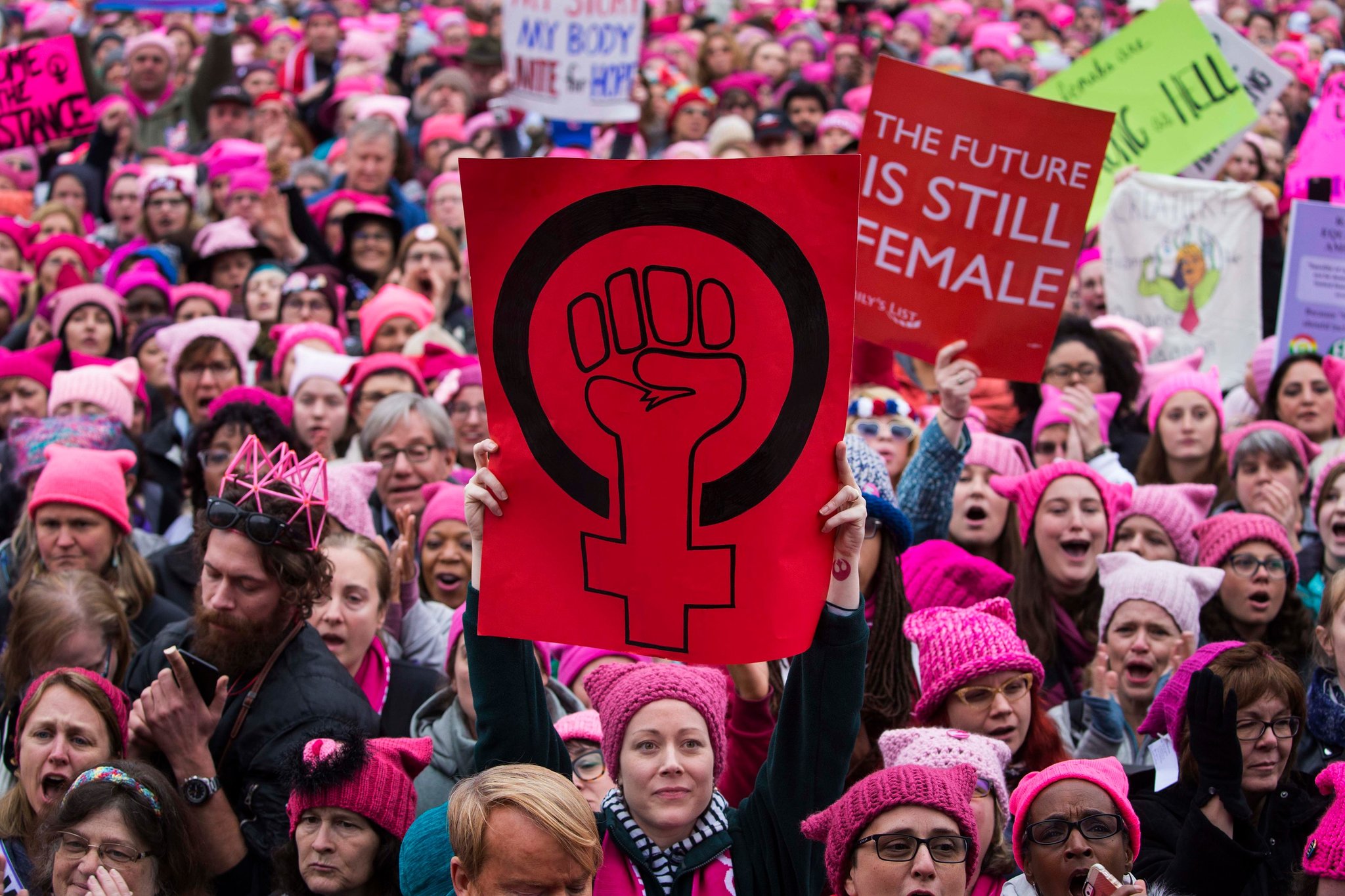
A sea of pink hats on march participants in Washington on Saturday, Jan. 21, 2017, the day after President Donald Trump's inauguration. (Photo: Ruth Fremson/The New York Times)
That's a bright silver lining to the presidential election, which many of us saw as a highly qualified woman losing to a man with no governing experience. I'm not alone in looking for that silver lining; The Associated Press and The Washington Post have written about 20- and 30-something women submitting their names for local school boards and city council seats.
And yet, the promise of women jumping into the political arena could easily be wishful thinking. In fact, the brutal 2016 election might have convinced more women that politics isn't worth it. That would be dispiriting, as I believe a feminine ethos is needed to improve education, environmental protection, health care, retirement security, and the working lives of parents and other caregivers.
As a nation, we've been at this juncture before. In the early 1990s, when Clarence Thomas was nominated to the Supreme Court, former aide Anita Hill accused him of sexual harassment in televised hearings before Congress. Outrage about how she was treated, in part, led to the election of four women to the U.S. Senate in 1992. We dubbed it "The Year of the Woman."
Twenty-four years later, it seems that great opening wasn't sustained. Come January, only 19 percent of Congress will be female.
This election year was so much harsher than 1992. T-shirts said "Trump that bitch." Fake news circulated about a Clinton aide's connection to a Washington pizza parlor that was a front for a pedophilia ring. At least some of the 42 percent of women who voted for Donald Trump believed his claim that Clinton was cynically playing the "woman card" to get elected.
Jennifer Lawless, the director of American University's Women & Politics Institute, told The Atlantic, "I think the defeat has the potential to set back female candidates' emergence. Women are less likely to think they have thick enough skin to endure the rigors of the campaign trail, and to contend that voters will vote for them, donors will give to them, and the media will cover them fairly."
Also in the silver-lining crowd is Wall Street legend Sallie Krawcheck. She says Trump's win could motivate business women to seek leadership roles. Fortune published Krawcheck's call-to-arms Tuesday in the form of a letter to her young daughter: The girl cried and vowed to "accomplish something important life," she wrote of her daughter's reaction to Clinton's loss.
Yet, even so, Krawcheck had to admit that there's "a perilously thin line of acceptable behavior" for women leaders - especially those who wear their strength and ambition boldly like Clinton.
Some countries have set quotas for women in elective office. In 1993, India amended its constitution to reserve one-third of village council seats for women. Also, one-third of council leaders, or pradhans, had to be female.
At the start, just 5 percent of council seats were held by India's women. By 2005, the experiment had exceeded its 33 percent quota, with 40 percent of seats in women's hands. The result has been a greater focus of village councils on clean water, police responsiveness, roads and education. Parents in villages that have had two female pradhans are more likely to want their daughters to study past high school. They see a potential future for them in political office. Do we?
First published in Newsday. Anne Michaud is the Interactive Opinion Editor for Newsday.
Aftermath of Hillary's loss
Originally published in Newsday, November 2016
For those on the left in shock or sorrow over Donald Trump's win, here is a quote worth remembering: "Ours was not a campaign, but rather an incredible and great movement."
The statement comes from Trump himself; it was part of his election night victory speech. But progressives have as much right to claim it as their own.
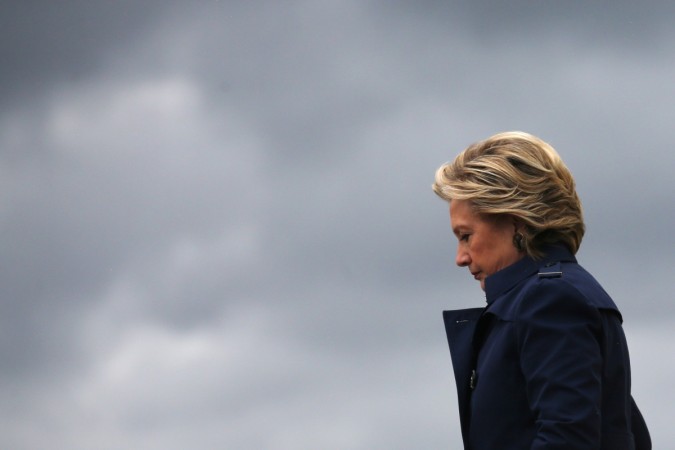
Former Democratic candidate for president Hillary Clinton (Photo: Reuters)
No, Hillary Clinton did not become America's first female president. But her candidacy was important - and contrary to the too-common narrative, many were inspired. This was a very close race. Clinton earned 59.7 million votes, and Trump won 59.5 million.
Millennial voters would have elected Clinton by an Electoral College vote of 504 to 23 had they been the only ones filling out ballots.
Granted, what we witnessed in this historic presidential race was often ugly, vulgar and obscene. Nevertheless, people were galvanized. Clinton's candidacy inspired a flash mob of 170 men and women in pantsuits in Union Square. Hundreds flocked to the Rochester grave site of suffrage activist Susan B. Anthony and placed "I voted" stickers on her tombstone. Parents took their daughters to polling places, on the campaign trail and to election eve parties.
Those opposed to Trump should not let that spirit get away but must bring it to bear in their continuing pursuit of women's rights.
In places yesterday, progressives were drawing lines in the sand. Physicians for Reproductive Health vowed to "remain vigilant," noting Trump's opposition to abortion, except in cases of rape, incest and when the mother's health is endangered.
Cecile Richards, president of Planned Parenthood, emailed supporters to say she was "Devastated. Angry. Heartbroken." But she added that the four most important words were these: "These. Doors. Stay. Open."
She was responding to Trump's pledge to defund Planned Parenthood despite its work providing women with birth control and services like breast and cervical cancer screenings. On Twitter, supporters urged others to sign up for a monthly donation plan.
Elsewhere, women celebrated electoral victories. Emily's List, which raises money for pro-abortion-rights women candidates, said a record number of women of color will be serving in Congress as a result of Tuesday's vote. Catherine Cortez Masto of Nevada was elected as the nation's first Latina senator. Kamala Harris of California, Gov. Maggie Hassan of New Hampshire and Tammy Duckworth of Illinois will all join the U.S. Senate in January.
These women, noted Jess O'Connell, executive director of Emily's List, arrive with diverse perspectives and strong voices "at a time when we've never needed them more," adding, "Their leadership will provide the checks and balances that are such a critically important part of our government, as we continue our work to achieve full equality for women."
Trump's attitude toward sexual assault will bear watching. We're all familiar with his boasts and women's accusations against him. But keep in mind that, as a nation, we are still struggling with how those in authority handle reports of sexual assault on college campuses and in the military. After a Pentagon survey found that roughly 26,000 men and women had been assaulted, Trump tweeted, "What did these geniuses expect when they put men & women together?"
Finally, progressives should hold Trump to a promise he made as a candidate to guarantee six weeks of paid leave for mothers who have just given birth.
Here's another quote worth remembering, and it comes from the gracious concession speech Clinton made yesterday morning: "This loss hurts. But please never stop believing that fighting for what's right is worth it."
First published in Newsday. Anne Michaud is the Interactive Opinion Editor for Newsday.
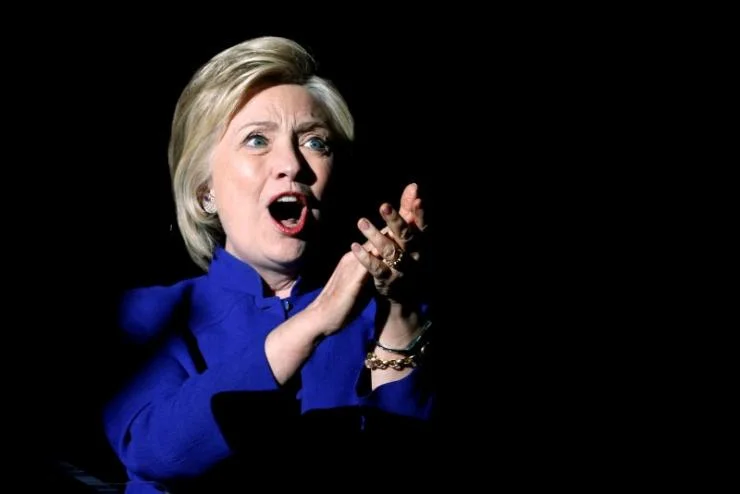
Hillary's path to power required Faustian bargain
From mapping a path to power to laudable notions of holding the family together, "Why They Stay" examine the uniquely challenging Faustian bargains that political wives grapple with.
Hillary Clinton couldn’t have known in 1998 how her husband’s high-profile philandering would play out. Would he be rehabilitated in the public eye? She couldn’t be sure, but she took the gamble. Had she left the marriage, today she might be the spurned wife of a retired politician instead of on the precipice to lead the free world.
Looking back on the path chosen by the nine political wives profiled in "Why They Stay: Sex Scandals, Deals, and Hidden Agendas of Nine Political Wives," we have the evidence to see a pattern—as old as the dynastic maneuverings of England’s medieval queens. The women married to the “royalty” of our times—politicians—make similar cold calculations in order to hold onto their “thrones” and their family’s history-making potential.
After covering politicians for decades as a reporter and columnist, I switched my gaze to the women behind the cheating men. Drawing from multiple sources that span the Roosevelts’ marriage to the more recent scandal involving Hillary Clinton’s closest aide Huma Abedin (wife of “sexter,” Anthony Weiner), "Why They Stay" argues that when it comes to the “power behind the throne,” women in the limelight weigh the risks and rewards. They remain loyal to their men, because of complex, often unconscious forces.
From mapping a path to power to laudable notions of holding the family together, I examine the uniquely challenging Faustian bargains that political wives grapple with, even as the public spotlight illuminates their every move.
Publishing in March 2017, Why They Stay explores the possible reasoning and motivation behind why political wives stay with their husbands after the husbands cheat. For updates on the book launch, sign up at whytheystaybook.com.

Huma had a Sophie's Choice
In the end, it probably wasn’t Huma Abedin’s injured wifely feelings that ended her marriage so much as her professional pride.
In the end, it probably wasn’t Huma Abedin’s injured wifely feelings that ended her marriage so much as her professional pride.
This is the third time that Anthony’s Weiner’s sexting has landed him on the front pages of New York tabloids. Again, he was embarrassingly shorn of his shirt, wearing just his skivvies and apparently happy below the waist.
The first time Anthony went public with a photo like this, it was intended for a 21-year-old admirer, but he accidentally tweeted it to his roughly 45,000 Twitter followers. It was May 2011, and he was congressman, a loner and a whip-smart combative son of middle-class Brooklyn with the ambition to run New York City as its mayor. Huma, his pregnant wife of one year, apparently hadn’t known about his obsession for e-sex with strangers.
But she knew when she propped him up for his mayoral run in 2013 – helping solicit funds from her friends among the Bill and Hillary Clinton campaign donors. And so it mustn’t be the infidelity – if you can call it that – of phone sex that finally caused Huma to walk. It must be the public embarrassment. A scandal isn’t a scandal if it’s private between two people. It’s a scandal when it appears on the cover of the New York Post.
For Huma, the Aug. 29 NY Post cover was a potentially career-ending juncture. It called into question her judgment at a time when her long-time mentor Hillary Clinton is a breath away from becoming the nation’s first female president. Why would a woman as talented and striking as Abedin stay with a guy who regularly humiliated her? Love is one reason, but it doesn’t overcome every odd. Not odds this repeated and this public.
Heartbreakingly, the photo also compromised Huma as a mother. The couple’s son Jordan, now 4, appears as a baby next to his dad in the offending pic. His face was blurred out in the published photo – but, my God. One of the reasons the couple stayed together all these years – five years since his first fateful tweet in May 2011 – was an aspiration to give Jordan a good family life.
Huma said, at a July 2013 press conference, “I made the decision that it was worth staying in this marriage and that was a decision I made for me, for our son and for our family. I didn’t know how it would work out, but I did know that I wanted to give it a try.”
Anthony’s view in October 2014, as told to Politico, may have been the more pessimistic if realistic outlook for young Jordan: “I am quite confident that my son will have the ability to look at the totality of the experiences he has with his father and the record that I've got and judge me appropriately. Maybe, you know, it teaches him a little something about adversity and everything doesn't go great all the time.”
Especially not if you keep working at making it un-great, no.
Anthony could not keep his fetishes inside the walls of his home. Perhaps if he could have, his and Huma’s personal bargains could have had a chance. All relationships make accommodations – maybe those of political spouses more than the rest. But because of who Huma is – given her near-familial relationship with Hillary Clinton – the interpersonal is always going to be front-page, tabloid fodder.
Huma had to choose: Hillary or Anthony. Anthony’s behavior tilted the scale. As a mother and a political force, Huma knew the stakes on both sides were rising. I think she chose well.
If you liked this blog post, please sign up for updates on the book launch of "Why They Stay: Sex Scandals, Deals, and Hidden Agendas of Nine Political Wives" at whytheystaybook.com, publishing in March 2017. Anne Michaud is a veteran political journalist and columnist for Newsday in New York.