

Sadness at Anthony Weiner's demise
I wonder where we will find the next generation of political leaders if we have to screen for such a panoply of character flaws. Weiner is smart, rose from humble beginnings, and can talk circles around his opposition. All, so it seems now, gone to waste.
Although former Congressman Anthony Weiner mostly bedeviled me when I covered politics in New York City, I only feel sadness today at his political and personal demise. Any schadenfreude I felt after his first Twitter stumble in 2011, which led him to resign from Congress, has dissipated.
Partly that's a result of his repeated humiliation over time. No one deserves that -- even if he did set himself up by seeking such a high profile and insulting staff and reporters like me. The man's got an addiction, which I define as a willful self-destruction even as there are parts of one's life that are so worth showing up for. Like his vision for the middle class that he hoped to carry out as NYC mayor. Like his beautiful and extraordinary wife Huma Abedin, who filed for divorce on Friday even as Weiner was pleading guilty in the federal courthouse in Manhattan to sexting with an underage girl. Like the couple's son.
If kids don't give you a reason to be a better person, I don't know what does.
Weiner, however, even involved 4-year-old Jordan in his sext-capades. He took a suggestive image of himself for his 15-year-old sext partner as Jordan lay next to him in bed. I can only shake my head at how sad this is, how much this man in that moment was obliterating everything. Especially, but not exclusively, any image he could hold in his mind of himself as a good person.
To me, this is the nature and the bottom of addiction. Hatred of oneself creates a downward spiral, finally extinguishing decency and integrity.
In the opening lines of the documentary Weiner, for which filmmakers followed Anthony on the campaign trail for mayor in 2013, he admits to having done bad things but adds, "I've done good things, too."
I wonder where we will find the next generation of political leaders if we have to screen for such a panoply of character flaws. Narcissism, self-destructiveness, crossing the line into involving minors in one's obsession and damaging the public regard for a woman, Huma, who's a political force in her own right.
Are we, the public, supposed to overlook these flaws, as Weiner suggests, and concern ourselves with the good he might do in office? (I'm hard-pressed to find many accomplishments while he was in Washington.)
Who runs for political office in America today, at least on the highest levels, but for narcissists? Is there another motivation for public service, or are some politicians just better at hiding their self-regard? Perhaps self-regard doesn't have to be as toxic as Weiner's?
I'm sure I'm being too bleak about our political class. Weiner's felony guilty plea is depressing. He's smart, rose from humble beginnings, and can talk circles around his opposition. All, so it seems now, gone to waste.
If you liked this post, please subscribe to future updates by scrolling down on the home page. Also, please check out my book, Why They Stay: Sex Scandals, Deals, and Hidden Agendas of Nine Political Wives, published in March 2017.
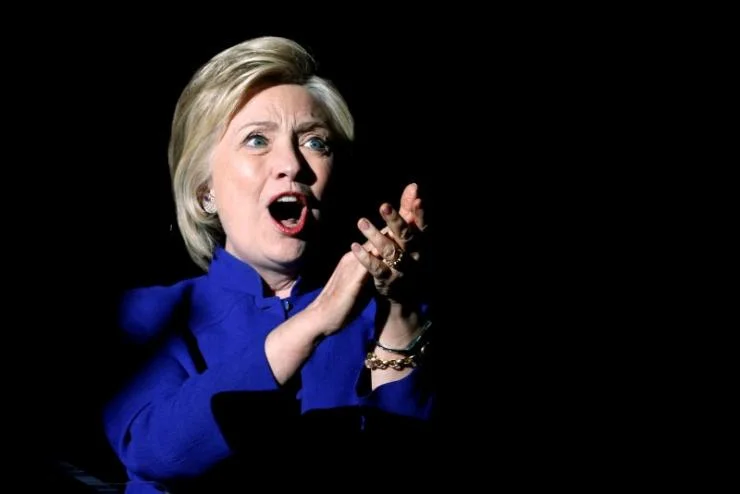
Hillary's path to power required Faustian bargain
From mapping a path to power to laudable notions of holding the family together, "Why They Stay" examine the uniquely challenging Faustian bargains that political wives grapple with.
Hillary Clinton couldn’t have known in 1998 how her husband’s high-profile philandering would play out. Would he be rehabilitated in the public eye? She couldn’t be sure, but she took the gamble. Had she left the marriage, today she might be the spurned wife of a retired politician instead of on the precipice to lead the free world.
Looking back on the path chosen by the nine political wives profiled in "Why They Stay: Sex Scandals, Deals, and Hidden Agendas of Nine Political Wives," we have the evidence to see a pattern—as old as the dynastic maneuverings of England’s medieval queens. The women married to the “royalty” of our times—politicians—make similar cold calculations in order to hold onto their “thrones” and their family’s history-making potential.
After covering politicians for decades as a reporter and columnist, I switched my gaze to the women behind the cheating men. Drawing from multiple sources that span the Roosevelts’ marriage to the more recent scandal involving Hillary Clinton’s closest aide Huma Abedin (wife of “sexter,” Anthony Weiner), "Why They Stay" argues that when it comes to the “power behind the throne,” women in the limelight weigh the risks and rewards. They remain loyal to their men, because of complex, often unconscious forces.
From mapping a path to power to laudable notions of holding the family together, I examine the uniquely challenging Faustian bargains that political wives grapple with, even as the public spotlight illuminates their every move.
Publishing in March 2017, Why They Stay explores the possible reasoning and motivation behind why political wives stay with their husbands after the husbands cheat. For updates on the book launch, sign up at whytheystaybook.com.